


2026 The Year Humanity Reached for the Moon, Mars and Mercury All at Once
From Artemis II’s historic crewed lunar flyby to China’s ice-hunting Moon hopper, Japan’s Phobos sample-return, and BepiColombo’s eight-year arrival at Mercury — an extraordinary convergence of missions is rewriting the rulebook for space exploration.

There have been big years in space before — 1969, 1977, 2004 — but few have arrived carrying the simultaneous weight of ambition that 2026 now carries. In a single calendar year, astronauts are flying to the Moon for the first time in half a century, robots are converging on asteroids and Phobos, a spacecraft that left Earth eight years ago is finally braking into Mercury orbit, and a telescope the size of a tennis court is being aimed at the deepest structures of the cosmos. Space exploration is not merely active in 2026; it is, by almost any measure, more active than it has ever been.
What follows is a comprehensive, source-verified account of every major current and imminent mission — written for readers who want more than a headline, and less than a technical briefing.

The Lunar Rush: Everyone Is Going Back
The Moon has not seen a human visitor since December 1972, when Apollo 17 commander Gene Cernan became the last person to walk on its surface. That half-century interlude is now definitively over. NASA’s Artemis II mission — carrying astronauts Reid Wiseman, Victor Glover, Christina Koch, and Canadian astronaut Jeremy Hansen — has dispatched a crew on a free-return trajectory around the Moon aboard the Orion spacecraft, mounted atop the Space Launch System rocket. It is not a landing — that comes with Artemis III — but it is the single most significant human spaceflight since the International Space Station era began.
Meanwhile, the commercial sector is no longer watching from the sidelines. Blue Origin’s Blue Moon Mark 1 lander is attempting its first uncrewed lunar landing as part of NASA’s Commercial Lunar Payload Services (CLPS) program, with Astrobotic’s Griffin lander — targeting the Moon’s south pole — scheduled for July under the same initiative. These missions represent a fundamental shift: for the first time, the surface of the Moon is being treated as a commercial destination, not merely a government objective.
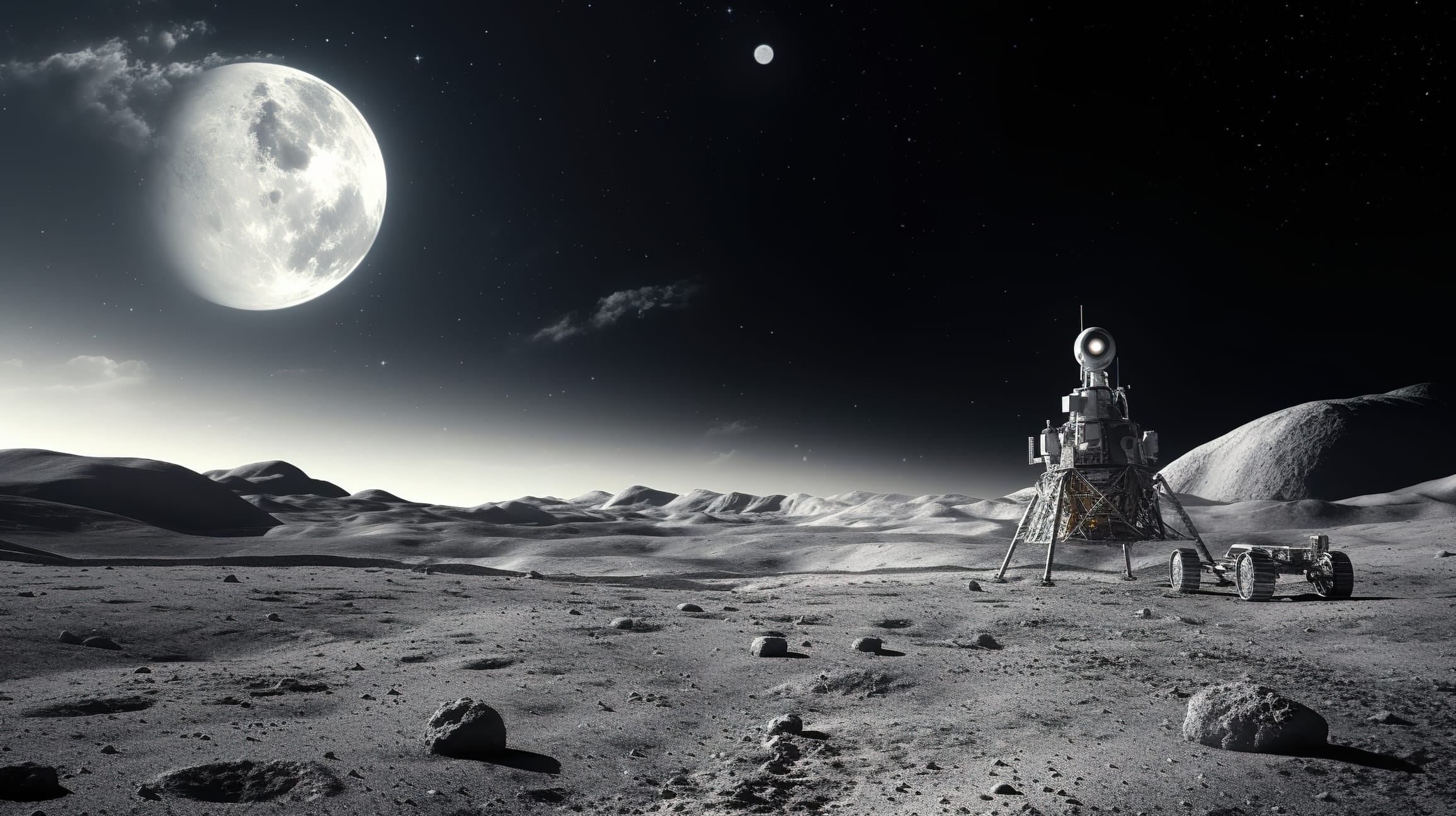
China’s approach is characteristically methodical and, in several respects, technically remarkable. Chang’e 7 is a five-component system: an orbiter, a relay satellite, a lander, a rover, and a miniature flying “hopper” designed to leap into permanently shadowed craters at the lunar south pole. Those craters — which have not seen direct sunlight in billions of years — are believed to harbor water ice deposits that could one day supply astronauts with drinking water or be electrolyzed into rocket propellant. If Chang’e 7’s hopper succeeds, it will be the first spacecraft ever to directly sample such a region.
The Moon’s south pole may hold enough water ice to sustain a permanent human presence — but confirming it requires going to the darkest, coldest places in the solar system.
— Dr. Sarah Noble, NASA Planetary Science Division
Mars: Studying the Air, Targeting the Moons
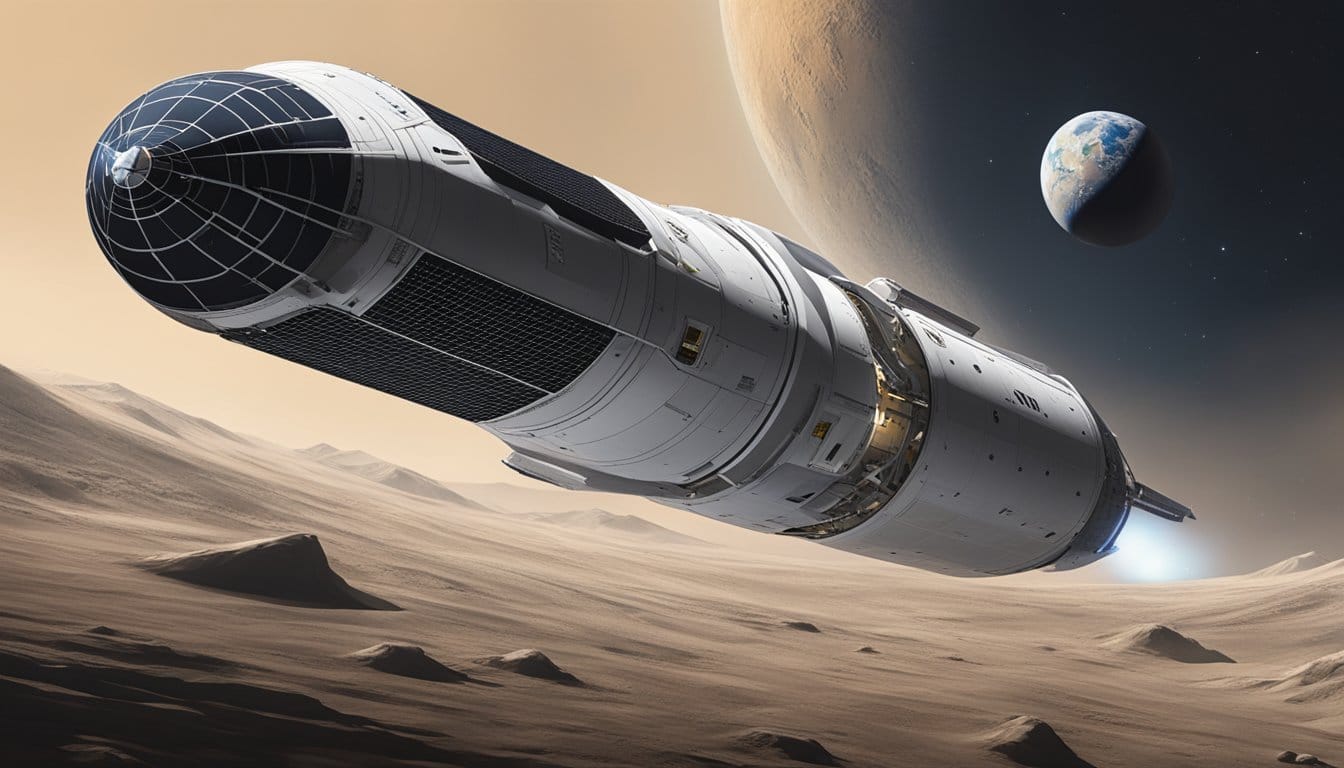
Mars missions in 2026 are less about landing on the surface and more about understanding it from orbit — and extending the scientific reach to the planet’s enigmatic moons. NASA’s ESCAPADE mission (Escape and Plasma Acceleration and Dynamics Explorers) dispatches a pair of small satellites — named Blue and Gold — that will study the mechanism by which the solar wind gradually strips away the Martian atmosphere. Mars once had a thick atmosphere; understanding exactly how it was lost is essential groundwork for any long-term human presence there.
More dramatic, perhaps, is JAXA’s Martian Moons eXploration (MMX) mission, which targets Phobos — the larger of Mars’ two small, potato-shaped moons. MMX will enter orbit around Mars, collect surface samples from Phobos, and return them to Earth: a feat that has never been attempted from any Martian body. Scientists believe Phobos may be a captured asteroid, and its regolith could provide a window into the early solar system’s composition and dynamics.
- Artemis II is the first crewed deep-space mission since Apollo 17 — a gap of more than 53 years.
- Chang’e 7’s hopper will target craters that receive zero direct sunlight — temperatures as low as −203°C (−333°F).
- BepiColombo has traveled over 9 billion kilometers since its 2018 launch to reach Mercury orbit.
- The Nancy Grace Roman Space Telescope will image an area 100× larger than the Hubble Space Telescope per observation.
- JAXA’s MMX will be the first sample return from the Martian system — returning materials by the early 2030s.
- At least 9 distinct missions across 6 agencies are active or launching in 2026, a record for any single year.
Asteroids: Aftermath and First Contact
In September 2022, NASA’s DART spacecraft (Double Asteroid Redirection Test) deliberately slammed into Dimorphos — the moonlet of the near-Earth binary asteroid Didymos — and successfully altered its orbit. It was the first deliberate demonstration of planetary defense technology in history. Now, ESA’s Hera spacecraft is arriving at the Didymos system to conduct a forensic survey: measuring the crater, characterizing the internal structure of Dimorphos, and quantifying exactly how much momentum was transferred by the DART impact. The data will be critical for planning any future planetary defense mission against a real threat.
In parallel, China’s Tianwen-2 mission is en route to Kamoʻoalewa (2016 HO₃), an unusual near-Earth asteroid that appears to orbit the Sun in a quasi-orbit near Earth. Some planetary scientists believe it may be a fragment of the Moon ejected by an ancient impact — a hypothesis that Tianwen-2’s sample-return mission could either confirm or definitively rule out.
The Universe in Sharper Focus: Roman Telescope
The Nancy Grace Roman Space Telescope is, in many ways, the anti-Hubble: where Hubble is extraordinarily deep but narrow, Roman trades some depth for a field of view 100 times larger. Stationed at the L2 Lagrange point — the same gravitational sweet spot as the James Webb Space Telescope — Roman will conduct wide-field surveys of dark energy, study the distribution of dark matter through gravitational lensing, and discover thousands of new exoplanets via microlensing. Named after Nancy Grace Roman, NASA’s first Chief of Astronomy and often called the “Mother of Hubble,” the telescope’s $4.2 billion price tag represents one of the agency’s most significant science investments since JWST.
BepiColombo: Eight Years to the Innermost Planet
Of all the missions arriving at their destinations in 2026, BepiColombo may carry the longest backstory. Launched in October 2018, the joint ESA–JAXA spacecraft has spent nearly eight years performing a complex gravitational dance — including flybys of Earth, Venus (twice), and Mercury itself (six times) — to bleed off enough velocity to be captured by Mercury’s gravity. Mercury is the least-visited inner planet; only NASA’s Mariner 10 and MESSENGER have studied it up close. BepiColombo’s two orbiters will investigate Mercury’s magnetic field, its disproportionately large iron core, and the mysterious dark material coating much of its surface. November 2026 marks the end of one of the longest interplanetary journeys in European space history.
Taken together, 2026 represents something qualitatively different from previous years of space activity: not a single signature mission, but a genuine plurality of ambitions pursued simultaneously across multiple agencies, multiple worlds, and multiple scientific disciplines. The year is not yet half over. What comes next may be more extraordinary still.
VERIFIED SOURCES & REFERENCES
- NASA Artemis II Mission Overview — nasa.gov/missions/artemis
- Chang’e 7 Mission Profile — planetary.org
- Blue Origin Blue Moon Lander — blueorigin.com
- NASA ESCAPADE Mission — science.nasa.gov
- JAXA MMX Mission — global.jaxa.jp
- ESA Hera Mission — esa.int
- CNSA Tianwen-2 — planetary.org
- ESA/JAXA BepiColombo — esa.int
- Nancy Grace Roman Space Telescope — roman.gsfc.nasa.gov
- Space.com — 2026 Space Missions Preview — space.com