Science saved a baby. Clean energy beat coal. The ocean is fighting back. Why aren’t these stories on your front page?
Published: February 17, 2026 | Category: The Positive News | Reading Time: 7 min
Turn on any major news channel right now and you’ll find a parade of crises, conflicts, and catastrophes. What you won’t find is the story of a baby who was given a death sentence at two days old — and is now home, thriving, waving at his parents. You won’t hear that, for the first time in all of recorded human history, the world generated more electricity from clean sources than from coal. You won’t see the footage of snow leopards being counted alive in Nepal for the first time ever, or 3D-printed reefs rising from the ocean floor in the Red Sea.
These stories happened. They were verified, peer-reviewed, and documented by the world’s most authoritative scientific institutions. They just didn’t make the cut.
We made the cut for them.
A Baby Named KJ Just Changed Medicine Forever
In the first 48 hours after KJ Muldoon was born in Philadelphia, doctors noticed something was wrong. He had become lethargic, wasn’t eating, and couldn’t maintain his body temperature. A blood test revealed the reason: his ammonia levels had exceeded 1,000 µmol/L — more than 30 times the normal upper limit.
KJ was diagnosed with a condition called CPS1 deficiency, a rare genetic disorder affecting approximately 1 in 1.3 million people. His liver lacked a critical enzyme needed to break down proteins, meaning ammonia — a byproduct of normal eating — was slowly poisoning his brain and organs. The disease carries a 50% mortality rate in infancy. At five months old, KJ was placed on the liver transplant waiting list.
Then, something extraordinary happened.
A team of physician-scientists at Children’s Hospital of Philadelphia (CHOP) and Penn Medicine, led by Dr. Rebecca Ahrens-Nicklas and Dr. Kiran Musunuru, had spent years preparing for exactly this moment. Within six months of his birth, they designed, manufactured, and received FDA approval for a drug that had never existed before — built specifically for one child’s specific genetic mutations.
The therapy used CRISPR base editing — a precise molecular tool that can correct a single “spelling mistake” in a person’s DNA — delivered directly to KJ’s liver cells via tiny fat particles called lipid nanoparticles. The FDA, recognising the urgency, approved the experimental treatment in under a week.
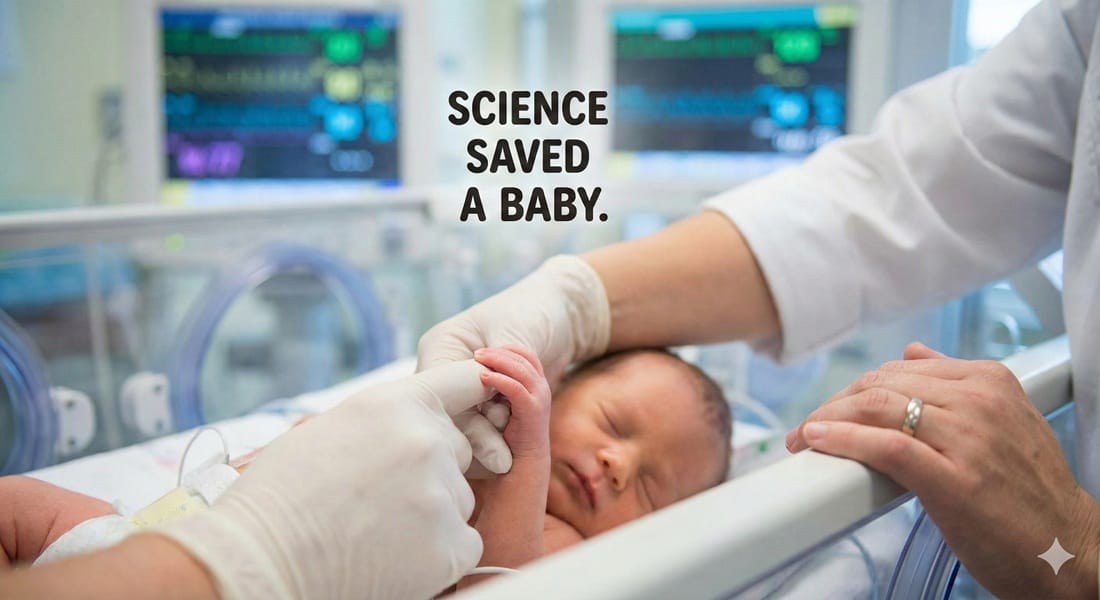
On February 25, 2025, KJ received his first infusion. It was the first time in history that a patient had been treated with a personalised, in vivo CRISPR gene-editing therapy custom-built for one individual.
By April 2025, KJ had received three doses with no serious side effects. He was eating more protein. He needed less medication. He could roll over and wave at his parents. In June, after 307 days in hospital, KJ went home — escorted by a police motorcade, his parents Kyle and Nicole holding him in the backseat for the first time outside a medical setting.
“We’ve been in the thick of this since KJ was born, and our whole world’s been revolving around this little guy,” Kyle Muldoon said. “We’re so excited to finally take a deep breath.”
Why this matters beyond KJ: The New England Journal of Medicine study documenting his case has opened a regulatory pathway for hundreds of other rare diseases — conditions that affect too few people for traditional drug development to be commercially viable. The researchers are now adapting the same base-editing platform to treat five more patients with related metabolic disorders. The NIH has called this “a new era of precision medicine” — bringing life-changing therapies to patients when timing matters most: early, fast, and tailored to the individual.
“The promise of gene therapy that we’ve heard about for decades is coming to fruition,” said Dr. Musunuru, “and it’s going to utterly transform the way we approach medicine.”
Renewable Energy Just Beat Coal for the First Time in History
It happened quietly, buried beneath earnings reports and geopolitical noise, but make no mistake: the energy transition just crossed a threshold it has never crossed before.
In the first half of 2025, according to a landmark report by energy think tank Ember, renewable energy sources — primarily solar and wind — generated more electricity globally than coal. Renewables contributed 34.3% of all global electricity, while coal fell to 33.1%. For the first time on record, the Sun and wind beat fire and carbon.
The numbers behind this milestone are almost impossible to comprehend:
- Solar alone grew by 31% in the first half of 2025, generating an additional 306 terawatt-hours — enough to power the entire United Kingdom for over a year
- Solar met 83% of the entire increase in global electricity demand during this period
- 29 countries now generate more than 10% of their electricity from solar alone, up from just 11 countries in 2021
- China and India — two of the world’s most populous nations — both reduced their fossil fuel consumption as clean energy growth outpaced demand
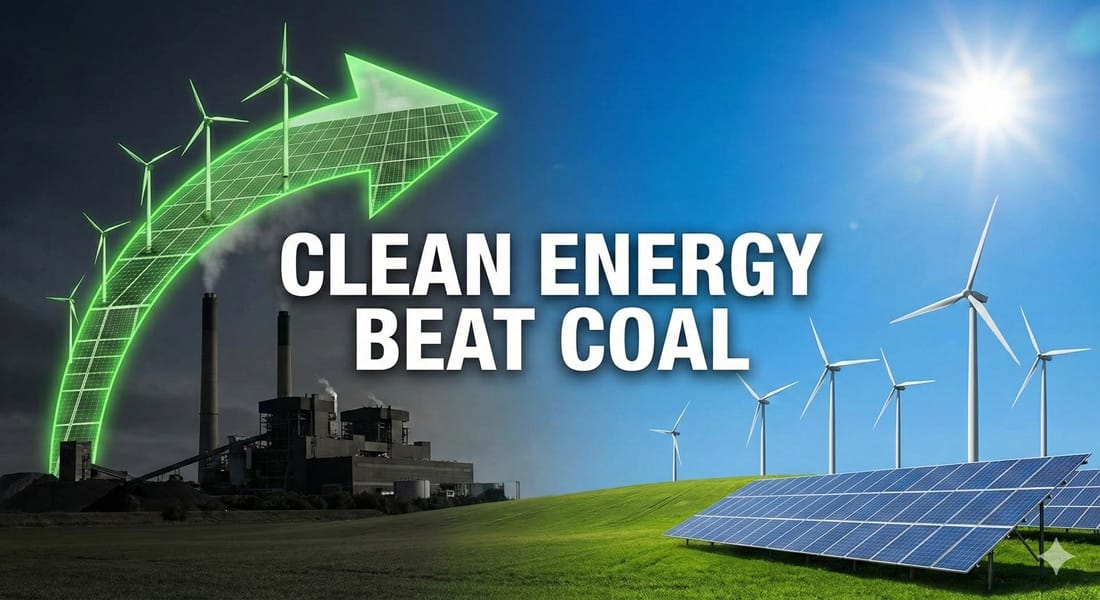
“Solar and wind are now growing fast enough to meet the world’s growing appetite for electricity,” said Małgorzata Wiatros-Motyka, Senior Electricity Analyst at Ember. “This marks the beginning of a shift where clean power is keeping pace with demand growth.”
The International Energy Agency (IEA) projects that renewables will supply 43% of global electricity by 2030, and that over the next five years, clean energy will meet more than 90% of all new electricity demand worldwide.
The climate context that CNN won’t mention alongside this: Global power sector carbon emissions actually fell slightly in H1 2025 — down 12 million tonnes of CO₂ — largely driven by clean energy surges in China and India. In a world where every headline about energy is framed around crisis, this is one of the most significant positive turning points of the decade. And it happened because solar panels got cheap enough that rooftop solar in the slums of Nairobi, Kenya, became economically rational for individual families.
That’s not a government programme. That’s a technology winning on its own merits.
The Ocean Is Quietly Fighting Back — With a Little Help
Here’s something NOAA doesn’t headline loudly enough: coral reefs, which cover less than 1% of the ocean floor but sustain more than 25% of all marine life, are the subject of some of the most innovative conservation work ever attempted — and it’s working.
In early 2025, Dutch conservation company Coastruction installed three custom-designed, 3D-printed reef modules in the Red Sea, engineered to match the specific species and environmental conditions of the region. The structures — inspired by Pacific atolls and tested in wave simulations — are already attracting mussels, algae, and fish, creating new biodiversity hotspots where barren ocean floor existed before. Similar structures installed in the Netherlands’ Oostvoornese Lake have been thriving for several years, according to Ocean Decade.
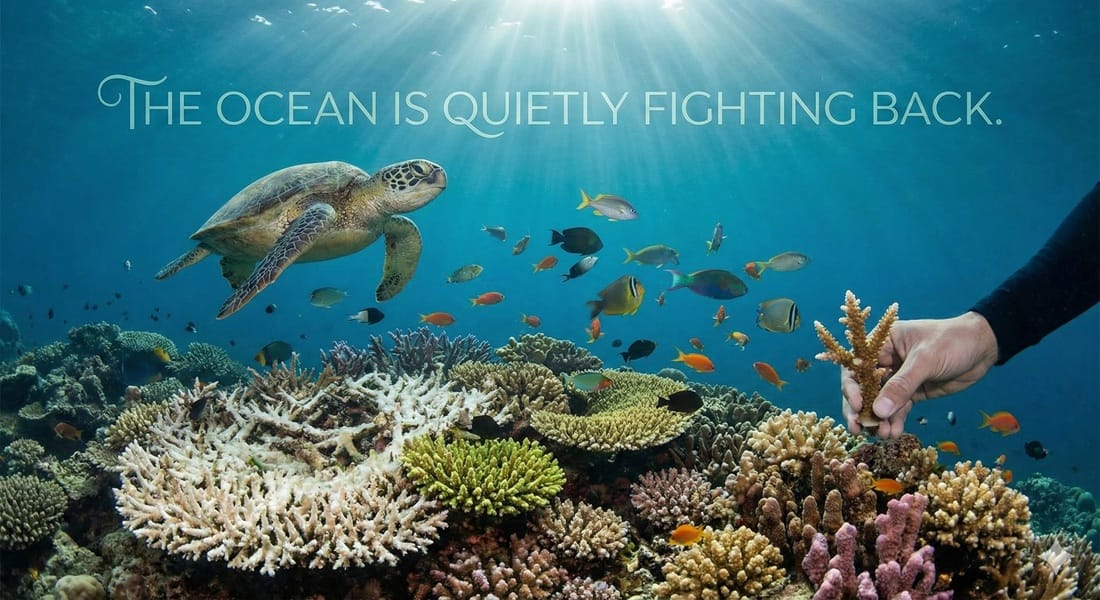
Meanwhile, marine scientists in Florida developed what conservation groups are calling an “underwater doorbell” — a surveillance system that monitors coral-eating fish in real time, allowing targeted removal of the specific predators doing the most damage. As The Guardian reported, the system has already identified key coral predators in ways traditional monitoring could never achieve.
And off the coast of the Philippines, a new Marine Protected Area around Panaon Island — home to three times the national average of coral cover and serving as a migratory corridor for whale sharks, marine turtles, and Philippine ducks — received formal protection status in 2025. In Palau, where 80% of marine territory has been protected from fishing, fish stocks in protected areas have more than doubled.
The Wildlife Conservation Society’s 2025–2030 Coral Reef Strategy puts it plainly: “By focusing on the coral reefs most likely to withstand climate change, we can spark recovery, build a resilient future, and show what’s possible when science, collaboration, and commitment come together.”
France Just Set a World Record in Nuclear Fusion — Sustained for Over 22 Minutes
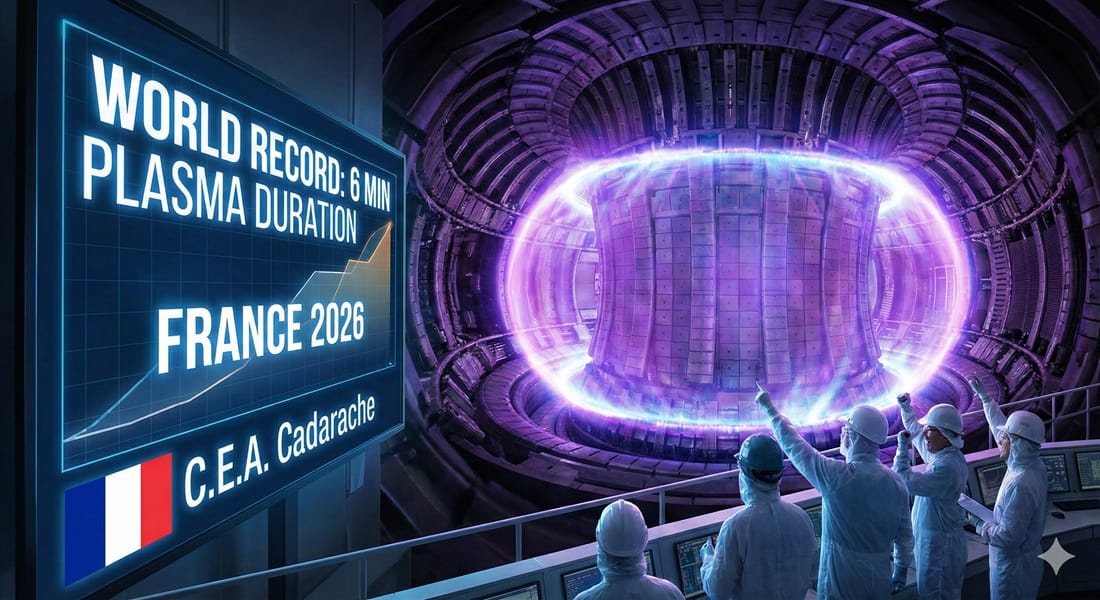
While headlines focused on everything else, scientists at the WEST tokamak facility in Cadarache, France quietly achieved something that would have seemed like science fiction a decade ago: they sustained a plasma reaction at fusion temperatures for 1,337 seconds — over 22 minutes — shattering the previous world record by 25%.
Nuclear fusion, the process that powers the Sun, promises virtually limitless, clean, carbon-free energy with no long-lived radioactive waste. For decades the joke about fusion has been that it’s “always 30 years away.” But sustained plasma — the critical technical challenge of keeping the superheated gas stable long enough to extract energy — is exactly the kind of milestone that signals that “30 years away” is getting closer, fast.
WEST’s record wasn’t a lucky fluke. It followed a systematic programme of engineering improvements, each one inching the technology toward the viability threshold. While commercial fusion power is still years from reality, records like this are the proof-of-concept milestones that attract investment, refine engineering, and train the next generation of fusion scientists.
Conservation Has a New Superpower: Environmental DNA
In the high-altitude rivers of Bhutan’s Eastern Himalayas, a team of WWF scientists collected water samples in 2025 and extracted something remarkable: environmental DNA, or eDNA — microscopic genetic traces shed by every creature that had ever passed through.
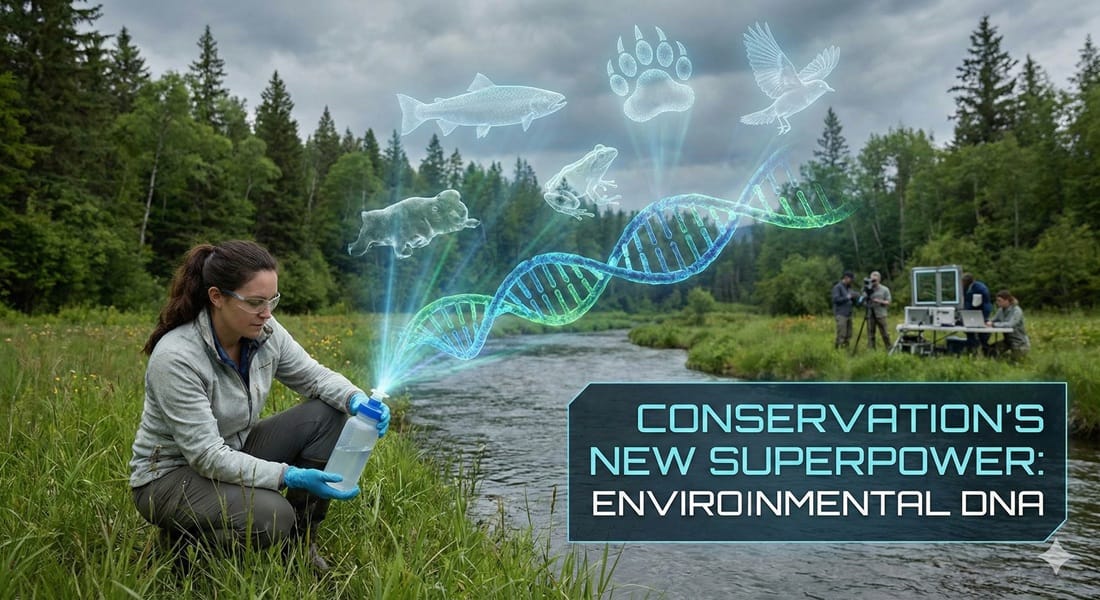
From a handful of river water, they identified snow leopards — one of the world’s most elusive and endangered big cats — along with 19 other mammal species, including the extraordinarily rare woolly flying squirrel and sambar deer at record-breaking altitudes. No camera traps. No tracking. No weeks of fieldwork. Just water.
The significance of this cannot be overstated. Conservation has always been limited by the near-impossibility of accurately counting secretive wildlife in remote terrain. eDNA changes that equation entirely. With the opening of Bhutan’s first eDNA laboratory in 2024, scientists can now analyse samples in-country, dramatically reducing the cost and time needed to gather biodiversity data.
Meanwhile, Nepal published its first-ever robust national estimate of its snow leopard population: a relatively stable 397 individuals — far more reliable than previous guesstimates. Numbers like this are the foundation of effective conservation policy. You cannot protect what you cannot count.
The Bigger Picture: We’re Living Through History
Every single story above was verified by peer-reviewed journals, government health agencies, or established international research institutions. None of them required speculation or spin. All of them happened in 2025.
A personalised genetic medicine, designed in six months for a single baby, has unlocked a new framework for treating hundreds of rare diseases. The energy transition crossed a threshold no one has ever crossed before. Reefs are being rebuilt, species are being counted, and fusion reactors are breaking records.
The world has serious problems. Nobody is pretending otherwise. But the same world that has those problems is simultaneously producing the solutions — and those solutions deserve to be told with the same urgency as the crises they’re designed to fix.
That’s what we’re here for.
Key Takeaways:
- Baby KJ became the first human treated with a personalised, custom-designed CRISPR gene therapy, paving the way for hundreds of rare disease treatments
- Renewable energy beat coal globally for the first time in recorded history, with solar growing 31% in H1 2025
- 3D-printed coral reefs are being deployed in the Red Sea; Palau’s no-fishing zones have more than doubled fish stocks
- The WEST fusion reactor sustained plasma for 1,337 seconds — a 25% improvement on the previous world record
- Environmental DNA is revolutionising wildlife conservation, allowing scientists to detect snow leopards from river water
Sources: Children’s Hospital of Philadelphia | NIH | New England Journal of Medicine | Ember Energy Think Tank | International Energy Agency | World Wildlife Fund | Wildlife Conservation Society | Ocean Decade / UNESCO | Wikipedia – 2025 in Science
Like this story? Share it. The world needs more of this in its feed.