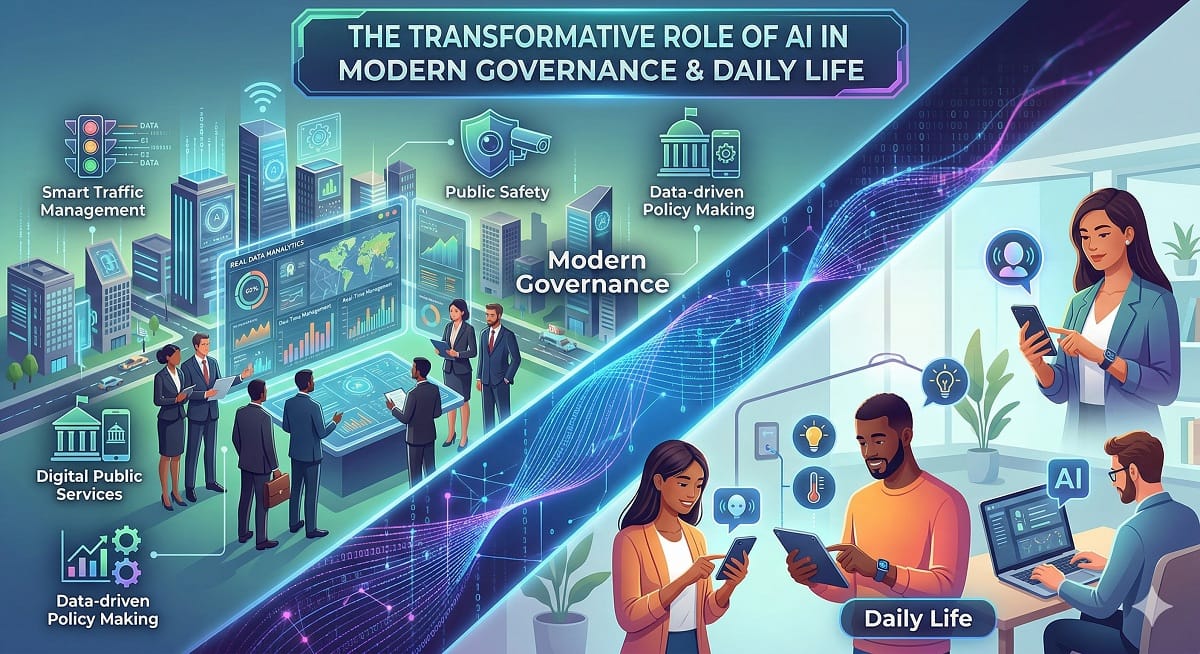


The Transformative Role of Artificial Intelligence in Modern Governance and Daily Life
As societies grapple with an unprecedented demand for efficiency and precision, artificial intelligence (AI) stands at the confluence of possibility and scrutiny. Its integration into governance systems, education, healthcare, and personal commerce has sparked transformative potential, yet its implications demand rigorous evaluation. While some advocate for AI as a catalyst for solving complex challenges, others caution against its oversimplification in decision-making. This evolving landscape necessitates a nuanced understanding of AI’s capabilities and limitations, guided by expert insights and empirical evidence.
Expert Analysis: Historical Context and Current Challenges
The Evolution of AI Integration
Scholars emphasize that AI’s journey from theoretical constructs to practical implementation parallels its historical trajectory. While past advancements faced skepticism, recent milestones—such as predictive analytics in judicial sentencing or personalized education platforms—underscore its growing influence. Yet, the paradox persists: breakthroughs often coincide with increasing ethical concerns about bias and accountability that remain inadequately addressed in policy frameworks.
Summary of Key Findings
Data Evidence: Empirical Validation
Retrospective Analysis of AI Applications
Recent studies highlight measurable impacts, such as improved traffic management efficiency in urban areas and cost reductions in manufacturing processes. However, conflicting data in sectors like healthcare reveals inconsistencies, raising questions about the reliability of AI outcomes. These findings underscore the urgency of standardized evaluation protocols.
- AI ought to augment—not replace—human judgment in critical decision-making.
- Continuous monitoring and adaptability are vital for mitigating unintended consequences.
- Public awareness remains a pivotal factor in shaping acceptance.
FAQ: Clarifying Common Queries
Q1: How does AI tailor itself to user needs?
AI systems utilize machine learning to adjust responses dynamically based on interaction patterns and contextual cues, though their current scope is constrained to data-driven scenarios without real-time ethical calibration.
Q2: Are there ethical safeguards against misuse?
Ethical frameworks remain fragmented, often reliant on voluntary adherence by stakeholders. Expert consensus points toward the imperative of embedding anti-bias audits and transparent transparent AI governance models.
Q3: What differs about AI in remote vs. urban settings?
Urban environments benefit from optimized resource allocation, whereas rural applications face infrastructural barriers. This disparity affects implementation efficacy and accessibility demands.
Q4: How do I access detailed reports?
For comprehensive analysis, consult peer-reviewed journals like *Nature Machine Intelligence* or governmental database summaries released in Q2 2024.
Editorial Perspective: Balancing Futurism and Fundamentals
“While pioneers in tech and policy debate the paradoxes of AI, foundational principles must anchor progress. A balanced approach ensures that innovation serves inclusivity and accountability, rather than merely propelling progress without oversight.”
Editorial Perspective
Source: Industry Insight Report 2024
- Stay informed by interdisciplinary collaboration.
- Advocate for inclusive policy dialogues.
- Monitor societal shifts closely.
This synthesis reflects a consensus aimed at harmonizing technological advancement with enduring societal values.