


The Vibe Coding Revolution: How UK Students are Building Business Apps in 48 Hours
By NewsRum Tech & Commerce Desk Published: March 23, 2026
For decades, the “Gatekeepers of the Internet” were those who spent years mastering C++, Java, and Python. But as we move through March 2026, that gate has been blown wide open. A new paradigm has emerged—one that Andrej Karpathy (former Tesla AI Director) calls “Vibe Coding.”
The premise is simple: If you can describe a business problem in plain English, you can now build the software to solve it. For a 12th-grade commerce student or an aspiring entrepreneur, this isn’t just a “cool tool”—it’s a multi-billion pound career advantage.
What is Vibe Coding? (The 2026 Definition)
Vibe Coding is the transition from Instruction to Intention. In 2024, you told an AI: “Write a Python function to calculate a rolling average.” In the Vibe Coding world of 2026, you say: “I need a Snappy dashboard that tracks real-time inventory for a London-based fashion startup. Make it look professional and handle sudden traffic spikes without lagging.”
You provide the “vibe,” the vision, and the constraints. The AI (now acting as an “Agent”) handles the architecture, the code, the database connections, and the deployment.
The Rise of the “Orchestrator”
As traditional coding loses its monopoly, the most valuable role in 2026 isn’t the “Coder,” but the Orchestrator. An Orchestrator is a decision-maker who understands business logic (Commerce) and uses a fleet of AI agents to execute it.
Editor’s Note: McKinsey reports that in 2026, 62% of UK organizations are experimenting with autonomous AI agents that don’t just “suggest” code but actually ship it.
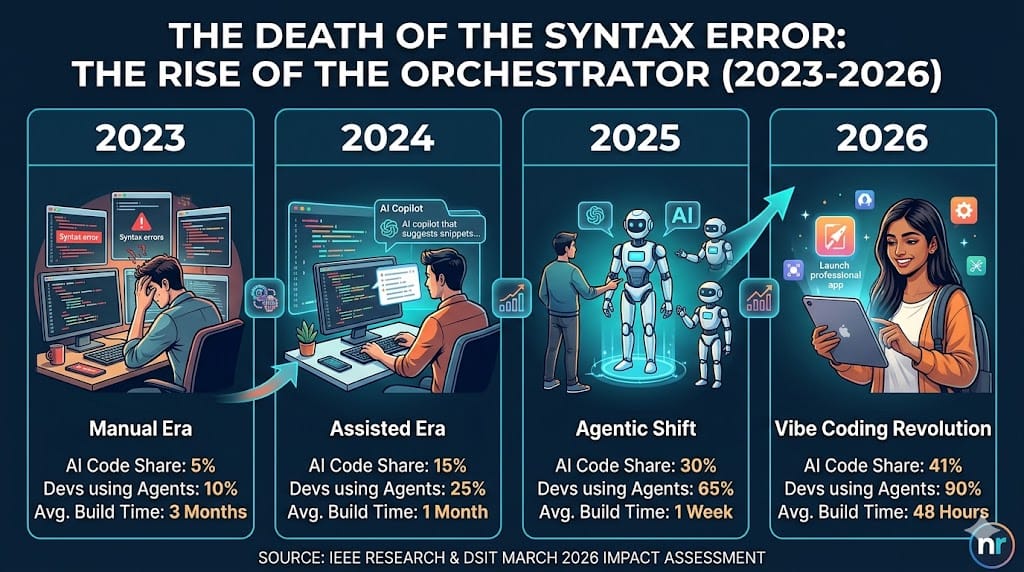
| Year | AI-Generated Code Share (%) | Devs using AI Agents (%) | Avg. App Build Time |
| 2023 | 5% | 10% | 3 Months |
| 2024 | 15% | 25% | 1 Month |
| 2025 | 30% | 65% | 1 Week |
| 2026 | 41% | 90% | 48 Hours |
The 48-Hour Weekend Project: A Student’s Guide
Can a commerce student really build an app? The answer is yes. This week on NewsRum, we’ve mapped out the “Zero-to-Launch” path using the top tools of 2026.
Step 1: Initialize Your Mission Control
Start with a browser-first tool like Lovable or Bolt.new. These platforms are the 2026 market leaders because they require zero installation. You simply “chat” your way to a working frontend.
The Goal: Describe your “Minimum Viable Product” (MVP). For a commerce project, this could be a “Tax Compliance Calculator for UK Freelancers” or a “Dynamic Supply Chain Optimizer.”
Step 2: Define the “Vibe”
Using natural language, describe the user experience.
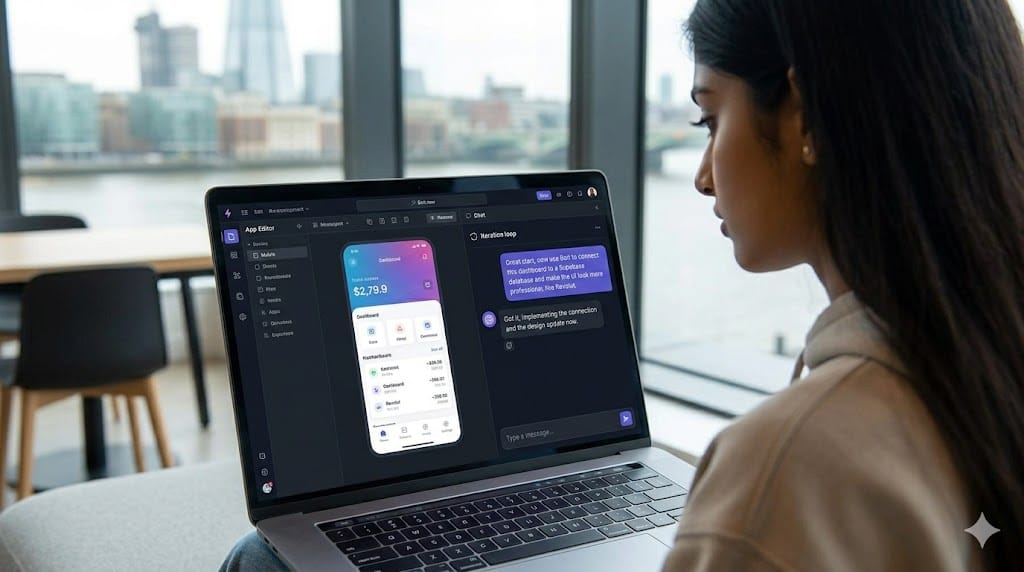
“Build a responsive personal finance dashboard using Next.js. I want it to look like the Wise or Revolut app—clean, dark mode, and trust-inspiring.”
Step 3: Iterate and Refine (The Feedback Loop)
The AI will generate the code and a live preview instantly. If something breaks, don’t panic. In 2026, you don’t debug manually; you Reflect.
Prompt: “The checkout button isn’t calculating the 20% VAT correctly. Fix the logic and ensure it rounds to two decimal places.”
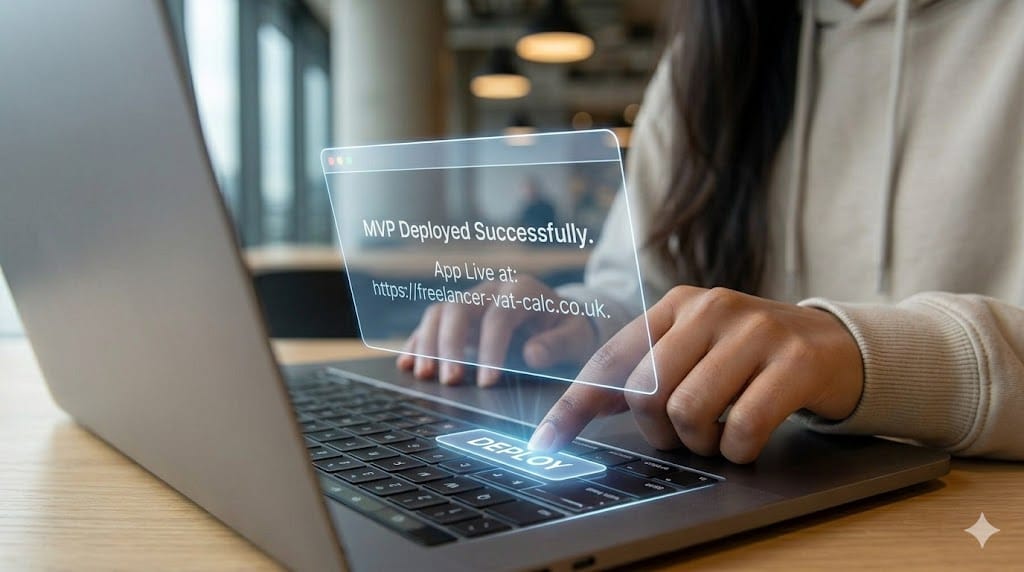
Step 4: One-Click Deployment
Platforms like Vercel v0 and Replit Agent now include built-in hosting. By Sunday night, your app can be live on a custom .com or .co.uk domain, ready to show potential employers or investors.
Your 2026 Toolbelt: The “Big Four”
If you’re looking to take NewsRum or your personal portfolio to the next level, these are the tools you need to master this week:
Lovable: The gold standard for UI/UX. If you care about design and want your app to look “Apple-level” polished, this is your starting point.
Bolt.new: The fastest path to a full-stack prototype. It handles databases (Supabase) and authentication in seconds.
Google Antigravity: A multi-agent collaboration tool. It uses “Mission Control” to let different agents (Gemini, Claude, GPT) work on different parts of your app simultaneously.
Cursor (Ultra 2026): For when you’re ready to graduate. It’s an AI-first IDE that understands your entire codebase, not just one file.
The Commerce Angle: Why “Business Sense” is the New Coding
As code becomes nearly free to produce, the bottleneck has shifted. The market doesn’t need people who can type syntax; it needs people who know what to build and how to validate it.
For a student studying commerce, your background in accounting, marketing, and economics is now your greatest technical asset. You can identify a “leak” in a business’s profit margin and build a bespoke tool to plug it—all without a Computer Science degree.
Conclusion: Don’t just Vibe, Orchestrate
Vibe Coding is powerful, but it isn’t magic. It is “high-stakes delegating.” To succeed, you must maintain a “Quality Bar.” In 2026, the winners are the ones who spend 70% of their time on Architecture and Business Requirements and 30% on AI Direction.
As we grow NewsRum, we will continue to explore these “Future Tech” breakthroughs. The earthquake in the software industry is far from over, and for those ready to embrace the “Orchestrator” mindset, the rewards have never been higher.