

Key Takeaways:
Technological Milestone: India’s first commercial-scale tropical Recirculating Aquaculture System (RAS) enables cold-water farming in Telangana.
Climate Defiance: The facility successfully raises Rainbow Trout in Hyderabad’s heat, proving technology can override climatic constraints.
Government Support: Union Minister Shri Rajiv Ranjan Singh will inaugurate the facility on January 5, part of a broader push for tech-driven fisheries.
HYDERABAD – In a significant development for agritech and aquaculture, Union Minister Shri Rajiv Ranjan Singh is set to inaugurate the Smart Green Aquaculture Farm and Research Institute in Telangana on January 5, 2026. The facility represents a major technological leap, utilizing precision engineering to successfully farm Rainbow Trout—a high-value cold-water species—in the tropical climate of Hyderabad.
Defying Climatic Constraints via Tech
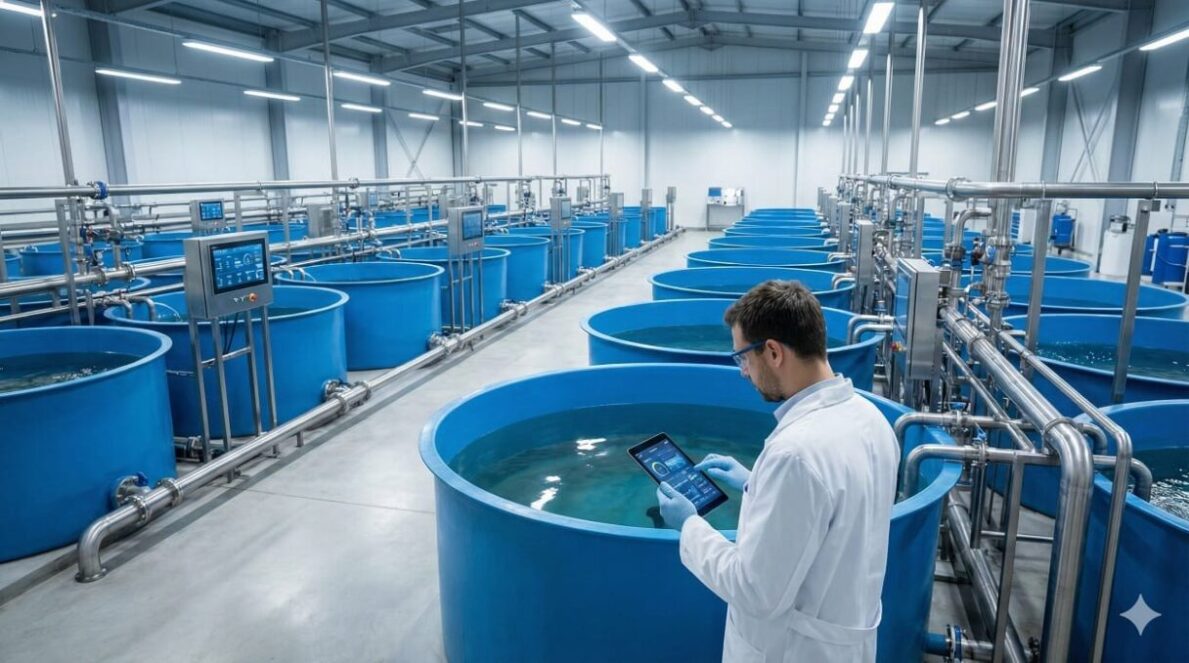
The new facility, located at Kandukur Mandal in the Ranga Reddy District, utilizes a state-of-the-art Recirculating Aquaculture System (RAS). Traditionally, Rainbow Trout farming in India has been geographically restricted to the cold, snow-fed waters of Himalayan states like Himachal Pradesh, Uttarakhand, and Jammu and Kashmir.
However, the Smart Green Aquaculture project has deployed advanced water recirculation technologies and controlled biological systems to replicate these conditions in the plains. This effectively decouples aquaculture from geography, allowing premium species to be harvested year-round regardless of external weather patterns.
According to a statement released by the Ministry of Fisheries, Animal Husbandry and Dairying, “This achievement overturns long-standing assumptions that premium aquaculture species are geographically constrained to specific climatic zones, and it establishes technology—not climate—as the primary determinant of aquaculture viability.”
From Subsistence to Precision Industry
The inauguration follows a General Body meeting and highlights the central government’s pivot toward technology-driven fisheries. Since 2015, the Centre has approved or announced cumulative investments totaling Rs 38,572 crore to modernize the sector.
The move toward RAS technology aligns with the government’s strategy to transition the industry from subsistence-led practices to a market-oriented ecosystem. By controlling water quality and biosecurity through automation, these systems offer higher productivity and reduced environmental impact compared to traditional open-pond farming.
Strengthening Human Capital
Beyond production, the Ranga Reddy facility will function as a live training and demonstration platform. It is designed to equip local youth with hands-on experience in:
Advanced aquaculture systems.
Automation and precision monitoring.
Biosecurity protocols.
This educational aspect aims to create a skilled workforce capable of managing high-tech bio-secure environments, a necessity as the Department of Fisheries pushes for the development of cold-water fisheries clusters across India.