

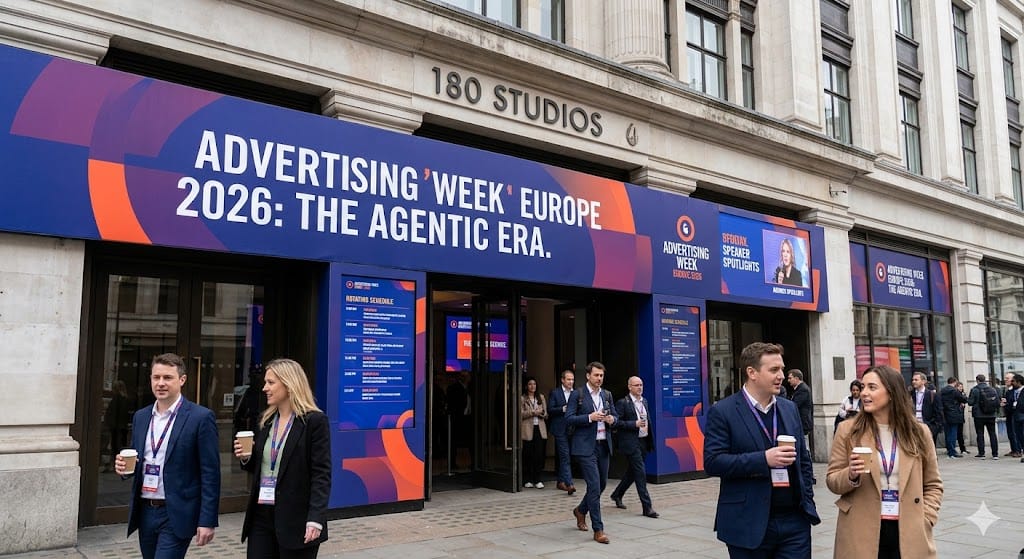
By NewsRum Commerce Desk Published: March 24, 2026
Advertising Week Europe 2026: 4 Tech Trends Reshaping the UK High Street
Welcome to March 2026. As over 7,000 marketing, media, and technology professionals descend upon 180 Studios in London for Advertising Week Europe, the conversation has notably shifted. For years, digital ad spend, programmatic buying, and the creator economy dominated the agenda. While those topics remain crucial, a new, tangible urgency has taken center stage: the technological renaissance of the physical world.
The UK high street, long subjected to premature obituaries, is not dying—it is evolving. It is transforming from a purely transactional space into a highly curated, tech-enabled destination. Retailers are realizing that in an era where consumers can buy anything with a single click from their sofa, the physical store must offer something profoundly different. It must offer an experience.
Backed by insights currently making waves across the AWE 2026 panels, here is a deep dive into the three defining tech trends that are successfully bridging the gap between digital convenience and physical retail, reshaping the UK high street in the process.
1. The Era of Agentic AI: Beyond the “Dumb” Chatbot
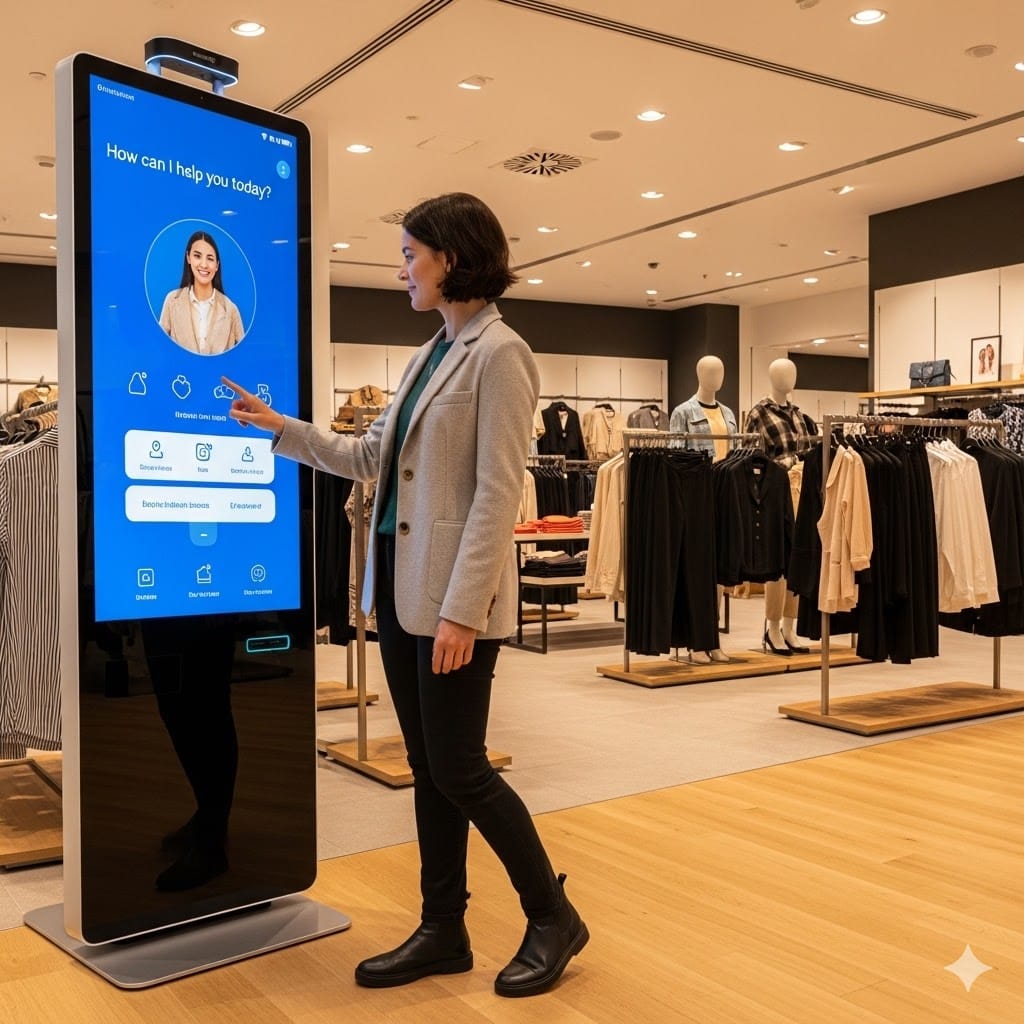
A shopper interacting with a sleek, freestanding AI-powered smart kiosk inside a modern UK high street retail store.
For the past three years, the retail industry has been obsessed with generative AI. However, much of this was relegated to the back office (writing product descriptions) or basic customer service (the often-frustrating website chatbot). In 2026, the narrative has shifted to “Agentic AI”—systems capable of not just answering questions, but acting autonomously to solve complex problems in real-time, both online and on the shop floor.
According to the British Retail Consortium, the most significant differentiator for brands this year is how effectively they blend AI efficiency with human trust. Agentic AI is being deployed in physical stores to empower sales associates. Rather than checking the stockroom, an associate can instantly consult an AI assistant via a headset or tablet to locate inventory, process an immediate ship-to-home order, or access a customer’s digital purchase history to recommend complementary items right there in the aisle.
The corporate mandate for this technology is massive. Data reveals that a staggering 81% of UK CEOs have made AI and data investment their absolute top priority for 2026, representing a steep climb from 60% the previous year, as noted by the Retail Technology Innovation Hub. Furthermore, the global artificial intelligence in retail market is forecasted to hit a monumental $20 billion by the end of 2026 Research and Markets.
The Marketer’s Takeaway: AI is no longer just a digital marketing tool; it is a vital component of the physical customer journey. Brands that use AI to eliminate in-store friction—such as queueing or out-of-stock disappointments—will win the fierce battle for high street loyalty.
2. ‘Retailtainment’ and the AR-Powered Storefront
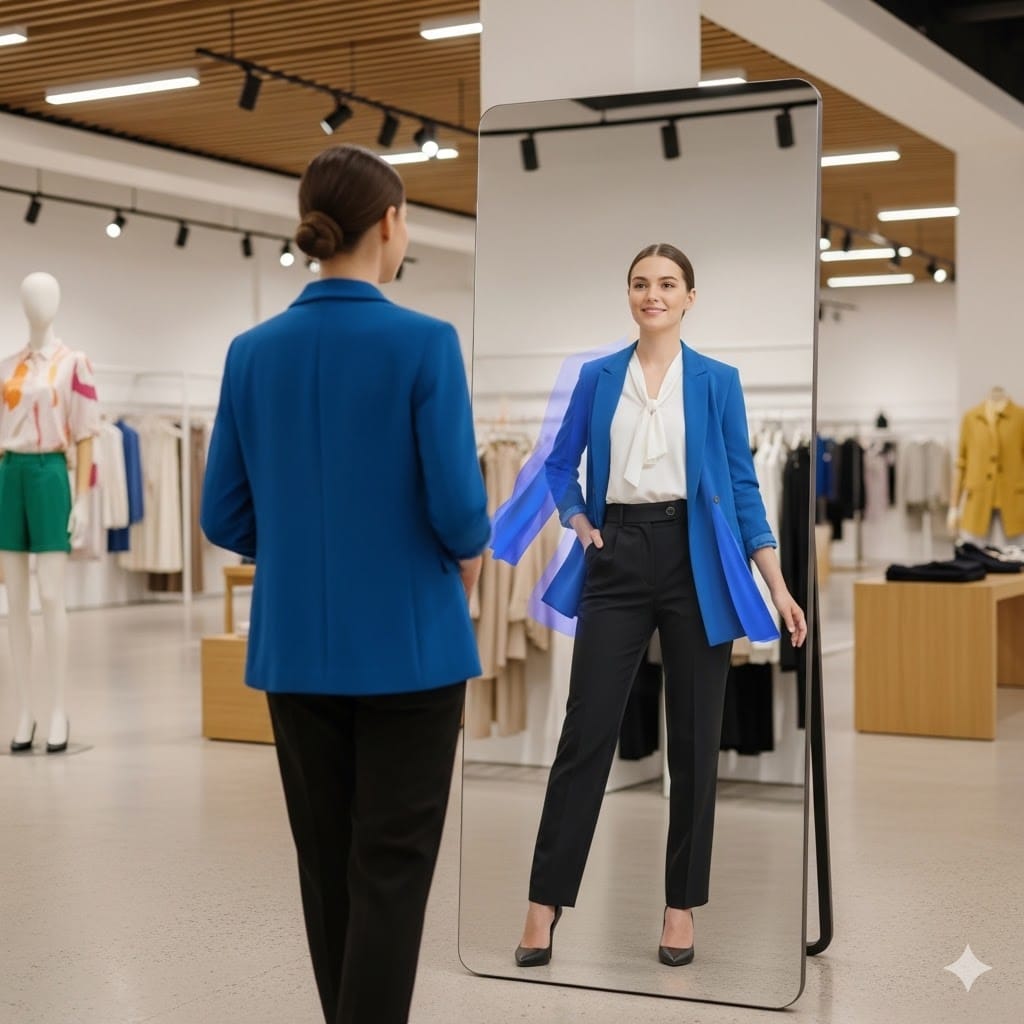
Shopper trying on clothes virtually using an augmented reality smart mirror
Why go to a store when you already know your size? The answer lies in “Retailtainment”—the fusion of retail and entertainment, largely powered by Augmented Reality (AR) and physical-digital activations. The modern UK high street is becoming a playground for brand immersion.
Instead of traditional changing rooms, pioneering fashion and beauty retailers are deploying smart mirrors equipped with advanced AR. These mirrors allow customers to virtually “try on” different outfits, makeup shades, or accessories in seconds, without ever unbuttoning a shirt. This isn’t just a gimmick; it is a proven commercial driver. As highlighted by Fact.MR, retailers deploying in-store body scanning and smart fitting technologies have recorded up to a 40% reduction in return rates, transforming AR from a flashy PR tool into a measurable ROI driver.
Furthermore, as noted in a recent breakdown of high street innovations by Wonderful, the expectation for interactive stores and gamified shopping experiences is fundamentally changing how retail square footage is valued. Stores are no longer just points of sale; they are marketing channels in their own right. A successful interactive storefront drives organic social media sharing, creating a localized viral loop that user-generated content (UGC) marketers dream of.
The Marketer’s Takeaway: Your physical store is your most potent billboard. By integrating AR and interactive displays, brands can increase in-store dwell time—a metric directly correlated with higher average basket values. The physical space must validate the brand promise made on TikTok and Instagram.
3. Social Commerce Meets Omnichannel Fluidity
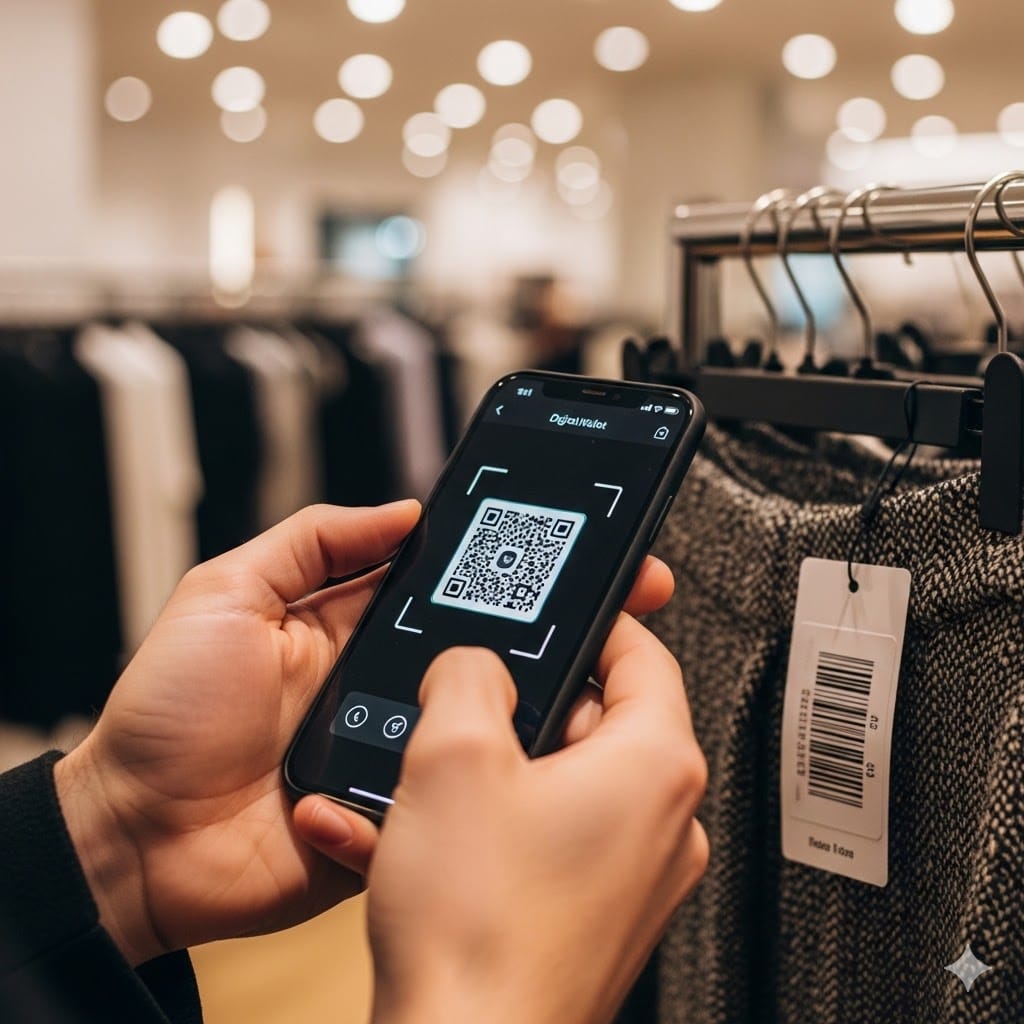
Person using a smartphone digital wallet to scan a product barcode in a high street shop
The traditional boundary dividing “e-commerce” and “physical retail” is officially obsolete. In 2026, the smartphone is the universal remote control for the high street. Consumers do not view their interactions with a brand as separate channels; they expect a singular, fluid ecosystem.
This hyper-connected omnichannel reality is evident in how consumers navigate physical spaces. A shopper might discover a product via a live-streamed social commerce event on TikTok, walk into a physical store in Manchester to feel the fabric, scan a QR code on the physical tag using a digital wallet to check reviews, and ultimately purchase the item through the brand’s app while standing right next to the mannequin.
The integration of social platforms and digital wallets into the physical shopping experience is a massive growth vector. As IMARC Group reports, the UK online retail market continues its rapid expansion, largely driven by the convergence of social media platforms and e-commerce functionality. Gen Z and Millennials, in particular, expect physical stores to support digital payment ecosystems seamlessly, from Apple Pay to buy-now-pay-later (BNPL) integrations at self-checkout kiosks.
Moreover, fulfillment itself has become an omnichannel marketing tool. Click-and-collect, curbside pickups, and immediate in-store returns for online purchases are the operational lifelines of the modern high street. Retailers who nail this logistical dance turn the simple act of a return into an opportunity for an incremental physical sale.
The Marketer’s Takeaway: Stop siloing your marketing budgets into “digital” and “retail.” Campaigns must be designed for the hybrid shopper. Ensure that your loyalty programs, inventory data, and promotional codes operate flawlessly across social media, e-commerce, and the physical checkout desk.
4. AEO is the New SEO: Solving the “Zero-Click” Problem
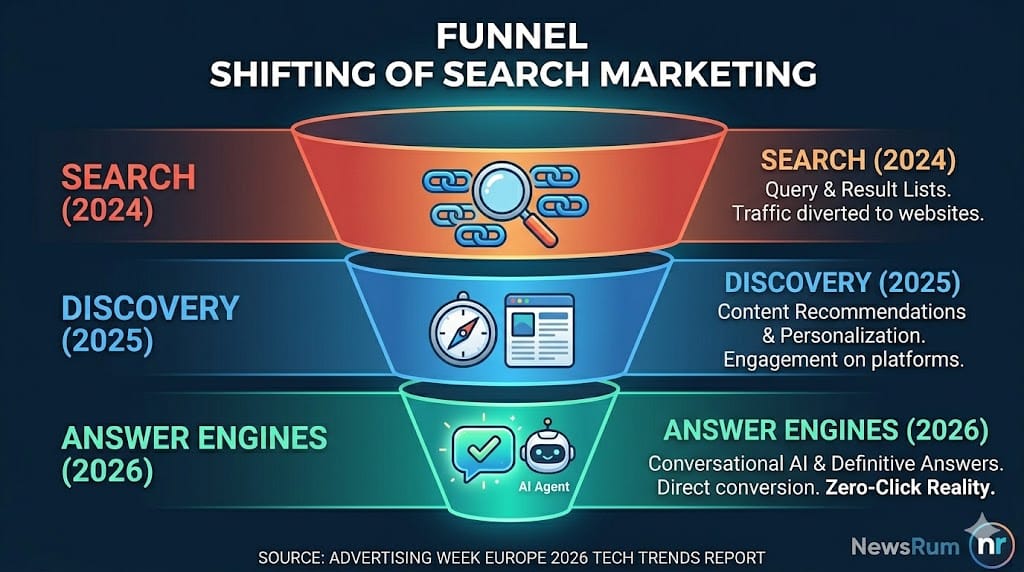
A major theme during the “AI’s Next Leap” session today was the transition from Search Engine Optimization (SEO) to Answer Engine Optimization (AEO).
With AI platforms increasingly providing “Answer Layers” rather than a list of blue links, brands that don’t adapt risk becoming invisible.
The Strategy: To rank in 2026, UK businesses must move beyond keywords and focus on Structured Data and enriched metadata.
The Goal: Ensure that when a user asks their AI, “Where is the most sustainable coffee shop in Soho open right now?”, your business is the single, definitive answer provided by the engine.
The Future is Physical, Powered by Digital
As the thought leaders at Advertising Week Europe 2026 debate the future of the industry, one truth is cutting through the noise: technology is not the enemy of the physical store; it is its savior.
The brands thriving on the UK high street today are those that respect the consumer’s time by utilizing Agentic AI for efficiency, honor their desire for experience through AR retailtainment, and seamlessly blend digital and physical realities into one cohesive omnichannel strategy. The high street of 2026 isn’t a place you go just to buy things; it’s a place you go to experience the brands you love, augmented by the best technology the digital world has to offer.