Atlas Is Here: Boston Dynamics’ Atlas Humanoid Robot Enters Production—The $50 Trillion Manufacturing Transformation Begins
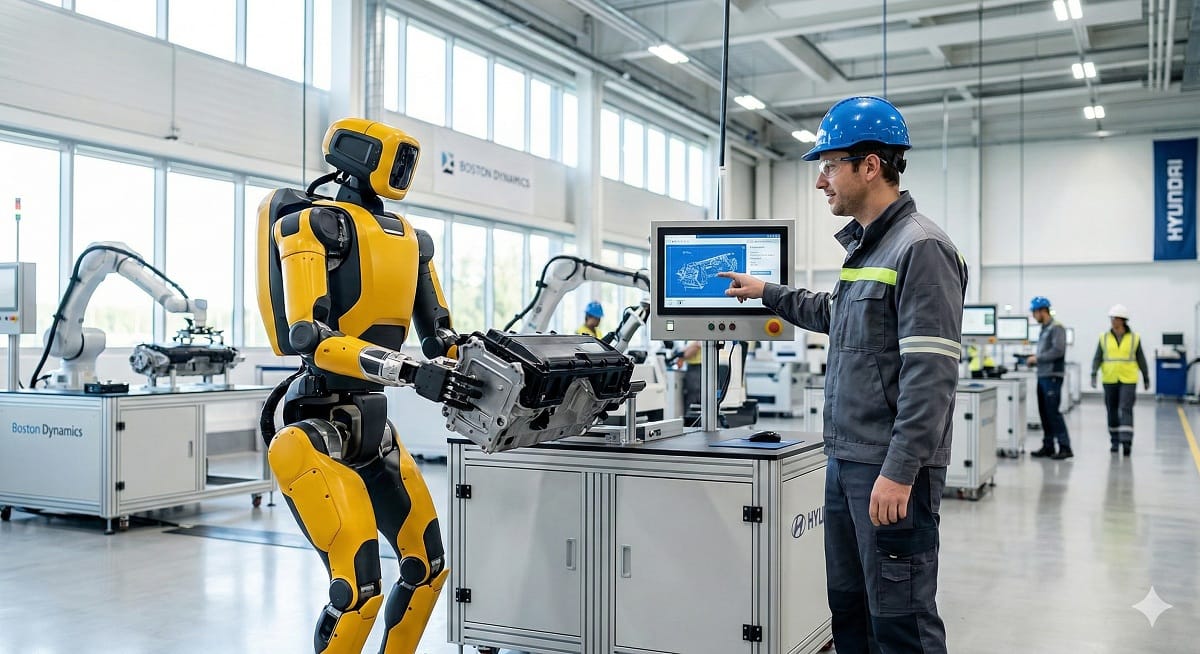
When Boston Dynamics showed its Atlas robot at CES 2026, it was a big deal. This was the moment the robotics world shifted. It moved from fun dance videos to real factory work. After 15 years of hard work, Atlas is now in production. It is heading to Hyundai’s factories by 2028. This marks the first time a humanoid robot goes from the lab to real-world jobs.
Great Hardware Meets Smart AI
Boston Dynamics CEO Robert Playter made a clear statement: “This is the best robot we have ever built. Atlas is going to revolutionize the way industry works.”
The new Atlas has amazing features for the real world:
Super Strength: It can easily lift up to 110 pounds.
Great Reach: It can stretch as high as 7.5 feet.
Toughness: It works in extreme weather, from -4 to 104 degrees Fahrenheit.
In 2024, the team changed Atlas to an all-electric design. This makes it faster to use and easier to fix. But physical skills are not enough. As director Alberto Rodriguez noted, “making Atlas into a product requires more than athletic performance.” The robots must interact smoothly and safely with people.
That is exactly where Google DeepMind helps.
Teaming Up with Google DeepMind
At CES 2026, Boston Dynamics and Google DeepMind announced a huge partnership. Google is adding its smart Gemini Robotics AI to Atlas. This is not just about basic coding. It is about helping the robot learn on its own.
With Gemini Robotics, Atlas can:
See and understand its surroundings in real-time.
Use factory tools safely and correctly.
Work well side-by-side with human teams.
Learn on the job and get better over time.
This AI allows Atlas to adapt quickly. If a factory floor changes, Atlas can handle it without needing a human to rewrite its code.
Heading to Hyundai Factories in 2028
Hyundai, the main owner of Boston Dynamics, will use Atlas in its Georgia car plants starting in 2028.
Here is the rollout plan:
Phase 1 (2028): Atlas will start by sorting and preparing parts.
Phase 2 (2030): The robot will move on to putting car parts together.
Teamwork: Atlas will work safely alongside human workers.
This careful plan lets the company test and learn. The main goal is to let robots do the dull and heavy lifting. This keeps human workers safe and lets them focus on more creative and rewarding tasks.
The Tech Powering the Future
Atlas needs very powerful computers to run its smart AI. Enter NVIDIA’s new Rubin platform.
NVIDIA Rubin is a brand-new, six-chip AI system. It is built to cut AI costs and boost speed. It removes slow-downs in AI training and inference.
Elon Musk talked about this major shift in AI tools, saying: “NVIDIA Rubin will be a rocket engine for AI. If you want to train and deploy frontier models at scale, this is the infrastructure you use.” This tech makes having many smart robots in one factory highly affordable.
A Bright Future for Manufacturing
The mix of great hardware and smart AI is incredibly exciting. If Atlas succeeds, factories will change for the better. Humanoid robots will work with people to build things faster and safer.
Why this is positive news:
Better Safety: Robots can do the dangerous and heavy work, reducing workplace injuries.
New Roles for Humans: People can train for higher-level, tech-focused jobs.
Massive Growth: It could bring huge boosts to how much we can create as a society.
The start of Atlas production is a giant leap forward. It proves that years of research are finally ready to help humanity. The future of manufacturing is here, and it looks brighter than ever!