

While headlines often focus on the fears surrounding artificial intelligence, a quiet revolution is happening in conservation. Around the globe, scientists and environmentalists are harnessing the power of AI to tackle some of the planet’s biggest challenges, turning data into actionable hope.
From tracking elusive wildlife to accelerating reforestation, here is how smart technology is making a real-world difference.
Eyes in the Wild: Protecting Endangered Species
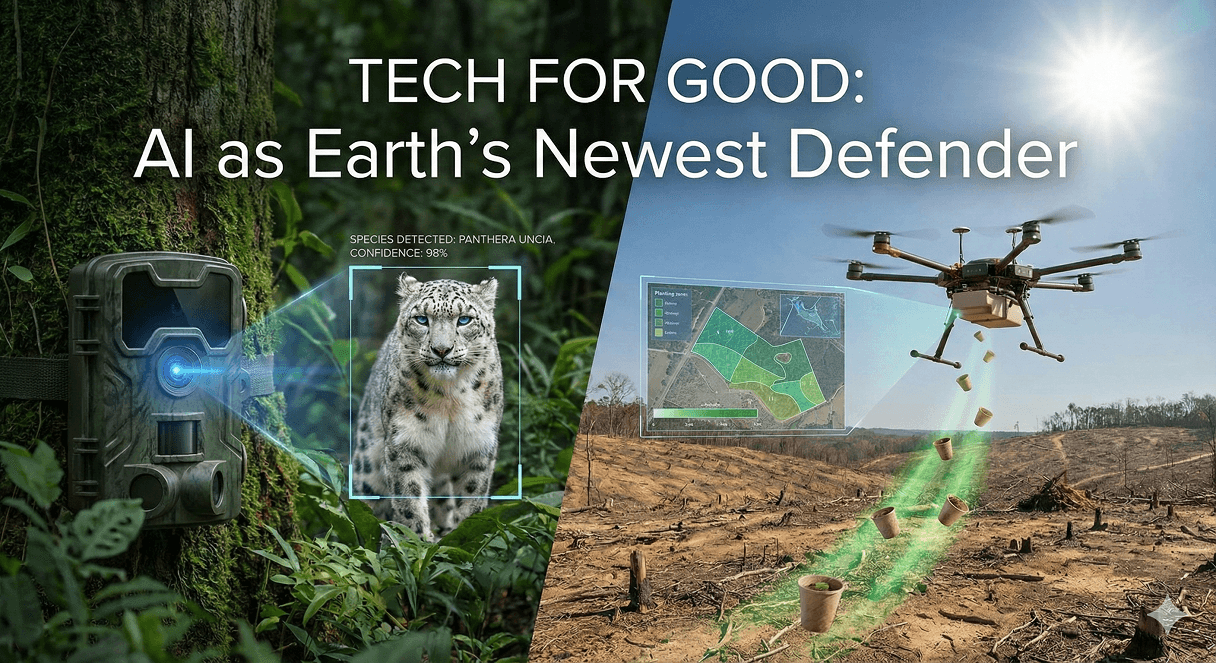
One of the most immediate impacts of AI is in wildlife monitoring. Traditionally, tracking endangered species involved researchers manually sifting through thousands of hours of video footage or audio recordings from remote camera traps—a process that was slow and labor-intensive.
Today, computer vision algorithms can process these images in near real-time. For example, AI models are being trained to instantly recognize specific animals, like tigers or elephants, in the wild. This speed allows rangers to respond faster to threats. According to reporting by National Geographic, these tools are crucial not just for counting animal populations, but for identifying poachers before they strike, acting as a high-tech shield for vulnerable species.
Reforestation at Scale
Combating climate change requires massive efforts to restore ecosystems, and humans alone can’t plant trees fast enough. This is where AI-driven robotics comes in.
New startups are utilizing drone technology combined with AI mapping systems to identify the best locations for planting trees in deforested areas, particularly those that are hard for humans to reach. These “seed-firing” drones can cover vast areas quickly. As highlighted in a report by TechCrunch, these automated systems are capable of planting tens of thousands of seed pods per day, significantly accelerating restoration timelines that used to take decades.
A Smarter Future for the Planet
These examples are just the beginning. The ability of AI to analyze vast datasets—from satellite imagery of coral reefs to acoustic patterns in the rainforest—gives conservationists an unprecedented understanding of planetary health.
While technology isn’t a silver bullet, major organizations like the World Economic Forum emphasize that scaling these AI solutions is critical to meeting global sustainability goals. By handling the heavy data lifting, AI frees up human researchers to do what they do best: devise creative strategies to protect our natural world.