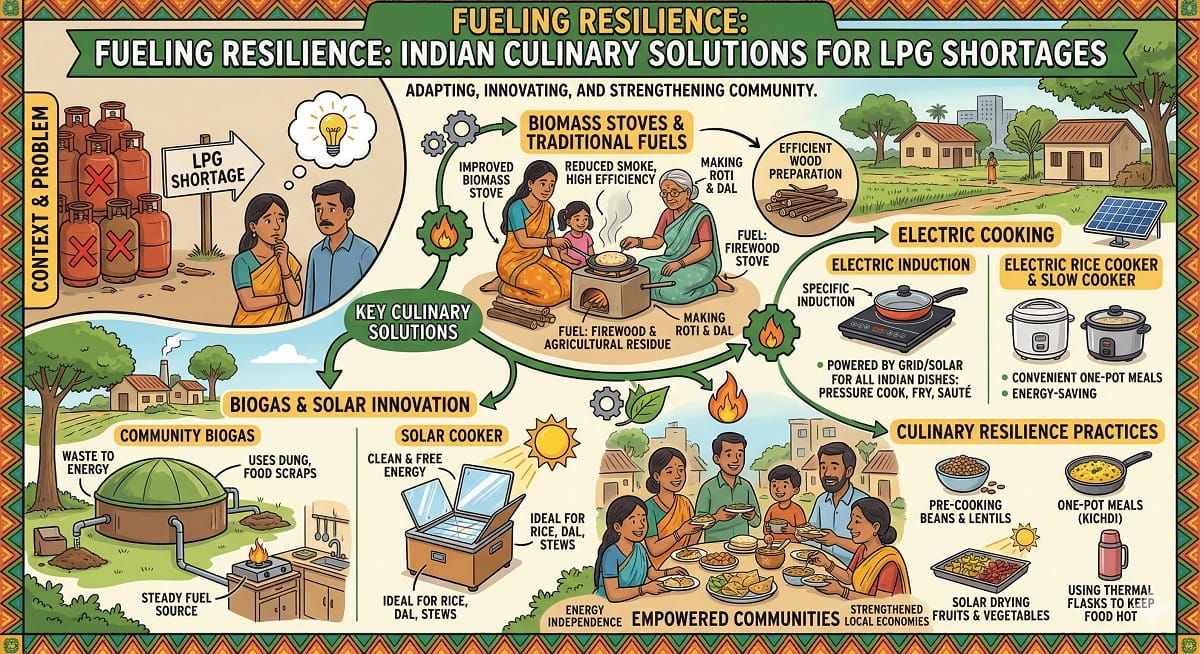


Fueling Resilience: Indian Culinary Solutions for LPG Shortages
As global energy dynamics shift and supply chains face unprecedented pressures, households worldwide, including India, are increasingly confronting the challenge of LPG (Liquefied Petroleum Gas) shortages. This isn’t just an inconvenience; it disrupts daily life, particularly for those reliant on LPG for cooking – a primary method for millions. However, necessity often breeds innovation, and Indian cuisine, with its rich tapestry of flavors and deep-rooted resourcefulness, offers a powerful toolkit for navigating these shortages. This article explores practical, nutritious, and delicious Indian recipes designed to minimize LPG dependence, drawing on traditional wisdom and modern adaptations, while emphasizing sustainability and nutritional balance.
Beyond the Flame: Embracing Alternative Cooking Methods
While LPG remains a staple, the current climate necessitates exploring alternatives. The Newsrum Editorial Desk emphasizes that “adaptability is key.” Traditional Indian cooking methods offer viable solutions:
- Solar Cookers: Harnessing India’s abundant sunlight, solar cookers provide a clean, free, and safe way to cook grains, lentils, and vegetables. Ideal for sunny days, they require planning but offer significant LPG savings.
- Induction Cooktops: Highly energy-efficient, induction cooktops use electricity to generate heat directly in the cookware, drastically reducing LPG consumption compared to traditional gas stoves. Pairing them with pressure cookers maximizes efficiency.
- Clay Pot Cooking (Handi): Cooking in unglazed clay pots leverages evaporative cooling, allowing food to cook slowly and evenly at lower temperatures, often requiring less fuel than conventional methods.
- Electric Pressure Cookers (Instant Pots): These modern marvels drastically reduce cooking times for lentils, beans, and grains, significantly cutting LPG usage while maintaining nutritional integrity.
Nourishing Without the Flame: Quick & Nutritious LPG-Light Recipes
Creating balanced, satisfying meals without heavy LPG reliance is entirely achievable. Here are some quick and nutritious options:
1. One-Pot Masoor Dal & Rice (Pressure Cooker)
This classic combination cooks efficiently together. Masoor dal (red lentils) cooks quickly, providing plant-based protein and fiber. Serve with steamed rice and a simple tempering of mustard seeds and curry leaves for flavor.
2. Vegetable Pulao (Pressure Cooker or Solar Cooker)
A fragrant rice dish packed with seasonal vegetables (carrots, peas, cauliflower, potatoes). Use minimal oil and spices. The pressure cooker ensures speed, while solar cooking offers a sustainable alternative.
3. Chana Masala (Pressure Cooker)
Chickpeas simmered in a tangy, aromatic tomato-onion gravy. Pressure cooking makes this protein-rich dish ready in under 30 minutes, perfect for a quick, satisfying lunch or dinner.
4. Sabzi with Millet Roti (Solar Cooker)
Millet flour rotis (flatbreads) are highly nutritious and cook quickly on a tawa (griddle) or solar cooker. Pair with a simple stir-fried vegetable sabzi (like bhindi or gobi) cooked in minimal oil.
5. Upma (Pressure Cooker or Solar Cooker)
A savory breakfast or snack made from semolina (rava). Sauté onions, mustard seeds, curry leaves, and vegetables, then add water and rava. Pressure cooking speeds it up, while solar cooking offers a green option.
Expert Insight: Nutrition & Sustainability
Dr. Ananya Sharma, a renowned nutritionist and advisor to the Newsrum Editorial Desk, highlights the nutritional benefits: “These recipes inherently focus on whole grains, legumes, and vegetables – the cornerstone of a balanced diet. Lentils and legumes provide essential protein and fiber, often lacking in diets reliant on processed foods. Millet rotis offer superior fiber and micronutrients compared to refined flour rotis. The emphasis on minimal oil and efficient cooking methods also supports heart health and reduces environmental impact.”
“The current challenge is an opportunity to reconnect with traditional, sustainable cooking practices that are inherently healthier and more resource-conscious.” – Dr. Ananya Sharma
Practical Tips for Navigating Shortages
Maximizing efficiency and minimizing waste is crucial:
- Plan Meals Strategically: Batch cook staples like rice, dal, or chana masala on days you can use alternative methods (pressure cooker, solar). Store portions for quick meals.
- Optimize Pressure Cooking: Use the minimum water required, ensure the lid is sealed tightly, and allow natural pressure release for certain dishes.
- Maximize Solar Potential: Plan solar cooking for days with consistent sunshine. Start early in the morning for optimal results.
- Embrace Leftovers Creatively: Transform yesterday’s dal or sabzi into new dishes like pulao, upma, or stuffed rotis.
- Prioritize Nutrient-Dense Foods: Focus on lentils, legumes, whole grains, seasonal vegetables, and fruits, which provide maximum nutrition per calorie and are often cheaper.
Building Resilience: A Community Effort
The Newsrum Editorial Desk underscores the importance of community: “Sharing resources, knowledge, and even meals can alleviate individual burdens. Community solar cooking initiatives or sharing pressure cookers can foster solidarity and ensure no one is left struggling alone.” This spirit of cooperation is vital in building resilience against supply disruptions.
Frequently Asked Questions
- Q: Can I really cook a complete meal without LPG?
A: Absolutely! While some dishes benefit from pressure cooking or solar methods, many Indian staples like rice, lentils, vegetables, and flatbreads can be prepared efficiently using alternatives like pressure cookers, solar cookers, or induction cooktops. Creativity is key. - Q: Are these LPG-light recipes nutritious?
A: Yes, they are often more nutritious. They emphasize whole grains (millets, brown rice), legumes (lentils, chickpeas), and vegetables, which are rich in fiber, protein, vitamins, and minerals. They typically use less oil and avoid processed ingredients. - Q: How do I start with solar cooking?
A: Begin with simple dishes like rice or vegetables. Choose a reliable, well-reviewed solar cooker suitable for your needs. Practice on sunny days, understand the cooking times, and plan meals accordingly. Many online resources and communities offer guidance. - Q: What if I only have a gas stove?
A: Even with gas, you can significantly reduce consumption. Use pressure cookers for lentils and grains, cook multiple dishes simultaneously on different burners, cover pots while cooking, and use the residual heat after turning off the flame. Efficient induction cooktops are also a great gas-saving alternative.
Key Takeaways
- Indian cuisine offers abundant, nutritious solutions for LPG shortages using traditional and modern efficient methods.
- Pressure cookers and solar cookers are highly effective LPG-saving tools for cooking staples like lentils and grains.
- Focus on whole grains (millets, brown rice), legumes, and seasonal vegetables for maximum nutrition and sustainability.
- Strategic meal planning, batch cooking, and creative use of leftovers are essential for managing shortages.
- Community support and knowledge sharing enhance resilience during supply disruptions.