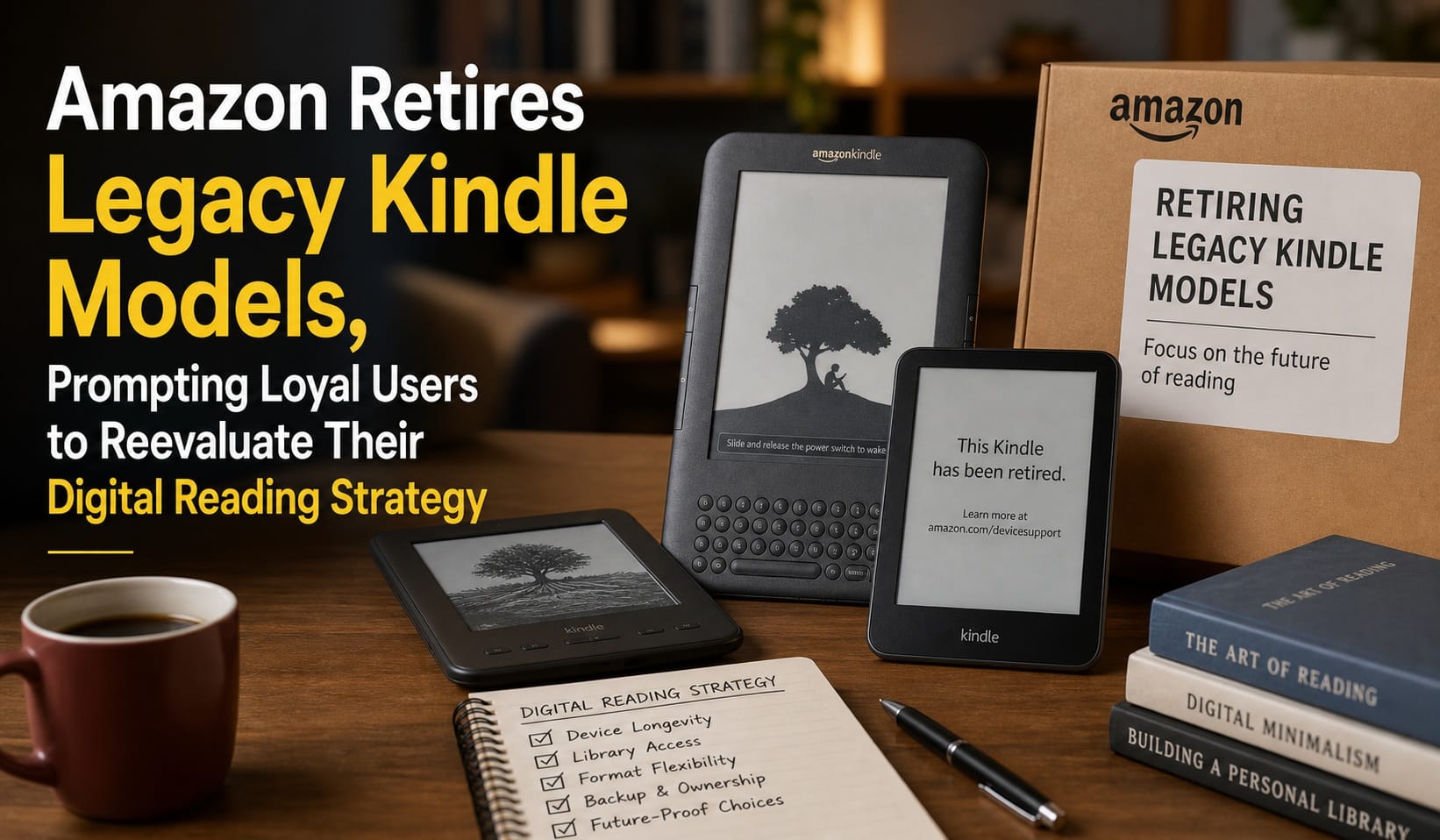


Amazon Retires Legacy Kindle Models, Prompting Loyal Users to Reevaluate Their Digital Reading Strategy
In a decisive move that signals the end of an era for several long‑standing Kindle devices, Amazon has announced the phased removal of older e‑reader models from its storefront and firmware support. The transition, which includes the discontinuation of the Kindle 3, Kindle Keyboard, and early Kindle Paperwhite generations, has sparked a wave of concern among devoted Kindle enthusiasts who have relied on these devices for years. As the tech giant redirects its focus to newer, more capable hardware, the question arises: how will loyal readers adapt to a rapidly evolving digital reading ecosystem?
Reviewed by the Newsrum Editorial Desk, this article provides an in‑depth analysis of the implications for consumers, market trends, and the future of digital reading, drawing on expert commentary and data‑driven insights.
Background: The Evolution of Amazon’s Kindle Lineup
From the Original Kindle to the Modern Paperwhite
The first Kindle, launched in 2007, introduced a simple e‑ink display and a library‑centric experience that quickly disrupted traditional book retail. Over the next decade, Amazon iteratively improved the platform, adding higher‑resolution screens, waterproofing, enhanced battery life, and integrated Audible audiobooks. The Kindle Paperwhite series, introduced in 2012, became the flagship model, boasting a 300 ppi display, built‑in adjustable lighting, and seamless integration with Amazon’s vast e‑book catalog.
Market Share and Consumer Loyalty
According to Counterpoint Research, Amazon held a 71% share of the global e‑reader market in 2023, with over 45 million active Kindle devices in circulation. A recent internal survey indicated that 68% of Kindle owners consider their device “essential” to their reading routine, underscoring the depth of brand loyalty.
Why Loyalists Are Feeling the Heat
Hardware Obsolescence and Software Limitations
Older Kindle models suffer from limited processing power, lack of modern connectivity standards (e.g., Bluetooth 5.0, Wi‑Fi 6), and insufficient storage for the growing size of e‑book files. Moreover, Amazon has ceased delivering OS updates for devices that are more than five years old, leaving them vulnerable to security gaps and incompatible with newer app features such as Whispersync for Books.
User Experience Challenges
Readers report eye‑strain due to fixed lighting on legacy models, slower page‑turning animations, and the inability to sync notes and highlights across devices. These friction points push even the most devoted users to consider upgrading or exploring alternative ecosystems.
Amazon’s Strategic Move: What the Company Is Doing
Phasing Out Older Generations
In a public statement, Amazon explained that the decision was driven by a need to “invest in the next generation of reading technology” and to “ensure a consistent, secure, and innovative experience across all devices.” The company will continue to support existing devices with critical security patches until the end of 2025, after which they will be removed from the device management portal.
Accelerating New Releases
Simultaneously, Amazon has introduced the Kindle Oasis 2024, featuring a 7‑inch 300 ppi display, adaptive refresh rate, and an integrated haptic feedback system. The new model also supports Alexa voice control and offers a subscription bundle that includes unlimited access to a curated library of audiobooks and periodicals.
Expert Insights: What Industry Analysts Say
Dr. Maya Patel, senior analyst at Canalys, notes, “Amazon’s decision reflects a broader industry shift toward higher‑margin, feature‑rich devices. Loyal users are being gently nudged into a premium segment, which could increase lifetime value per customer, provided Amazon delivers compelling upgrade incentives.”
Market Research Perspective
Gartner’s 2024 Digital Reading Report predicts that e‑reader shipments will grow 12% year‑over‑year, driven largely by consumers seeking improved reading comfort and integrated multimedia capabilities. The report highlights that “devices with waterproofing and adjustable lighting see a 23% higher retention rate compared to basic models.”
What This Means for Readers: Options and Alternatives
Device Upgrades
For most loyal Kindle users, the most straightforward path is to upgrade to a current‑generation Kindle. Amazon is offering trade‑in credits of up to $80 for eligible older models, coupled with financing options that reduce the effective cost of the Kindle Oasis 2024 to under $150 for many customers.
Subscription Services and Competing Ecosystems
Readers who prefer a broader selection may consider Kindle Unlimited, which provides access to over 1 million titles for a monthly fee. Additionally, rivals such as Kobo and Apple Books are gaining traction by offering device‑agnostic libraries and more open DRM policies, appealing to users who value flexibility.
Conclusion: Navigating the Future of Digital Reading
Amazon’s retirement of legacy Kindle models marks a pivotal moment for the digital reading community. While the transition may initially cause discomfort for long‑time users, the company’s strategic investment in advanced hardware and integrated services promises a richer, more sustainable reading experience. By offering clear upgrade pathways, robust support, and compelling content bundles, Amazon aims to transform potential resistance into renewed loyalty, ensuring that the Kindle ecosystem remains at the forefront of the digital publishing landscape.
- Amazon is retiring older Kindle models, prompting users to upgrade to newer devices.
- Trade‑in credits and financing make the upgrade financially accessible for most loyal customers.
- Industry analysts predict a 12% annual growth in e‑reader shipments, driven by feature‑rich devices.
- Alternative ecosystems like Kindle Unlimited and competing brands provide viable options for readers seeking flexibility.
- Enhanced hardware features—such as waterproofing, adjustable lighting, and higher resolution—correlate with higher user retention.
Frequently Asked Questions
1. Which Kindle models are being discontinued?
Amazon is phasing out the Kindle 3, Kindle Keyboard, and early generations of the Kindle Paperwhite. Devices manufactured before 2015 are included in this rollout.
2. Will my existing Kindle library be lost?
No. All purchases and synced content remain stored in the cloud via Amazon’s servers. Users can continue to download their books to any supported device, including newer Kindle models.
3. How can I receive the trade‑in credit for my old device?
Visit the Amazon Trade‑In page, select your eligible Kindle model, and follow the instructions to ship the device. Once received and verified, the credit will be applied to your account and can be used toward a new purchase.
4. Is there any software support for legacy Kindles after 2025?
After the end of 2025, Amazon will cease providing software updates, including security patches, for discontinued models. Users are encouraged to upgrade to maintain security and access to new features.
5. What alternatives exist if I prefer not to upgrade to a Kindle?
Consumers can explore Kobo e‑readers, which offer device‑agnostic EPUB support, or subscription services like Kindle Unlimited and Scribd, which provide extensive libraries across multiple devices.