

Key Takeaways
✔ Green energy is becoming the backbone of the global economy.
✔ Solar and wind power remain the fastest-growing renewable energy sources.
✔ Battery Energy Storage Systems (BESS) are solving one of renewable energy’s biggest challenges.
✔ Green hydrogen is emerging as a major fuel for industries that cannot easily electrify.
✔ Artificial intelligence is transforming renewable energy generation, maintenance, and grid management.
✔ Governments worldwide are investing billions in clean energy to achieve net-zero emissions.
✔ India is positioning itself as one of the world’s largest renewable energy markets.
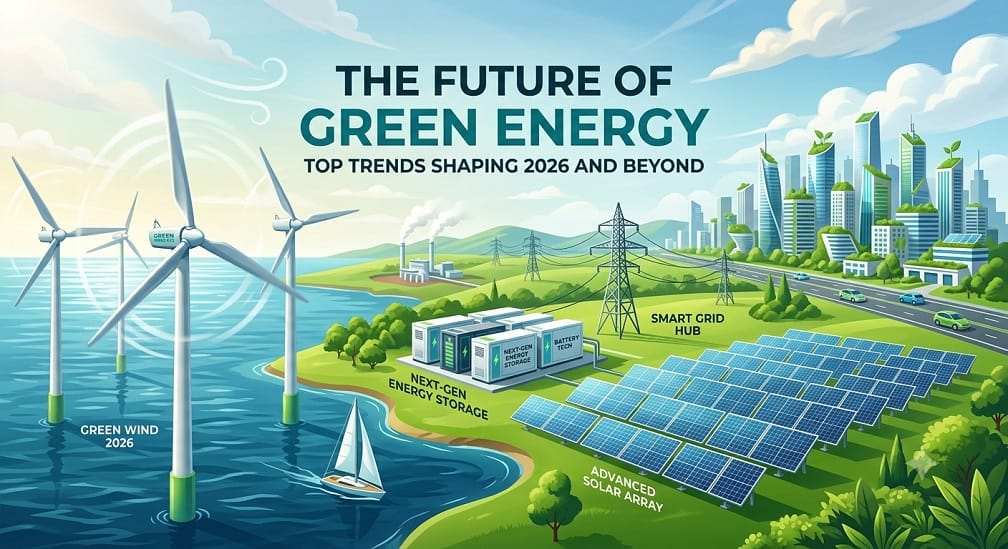
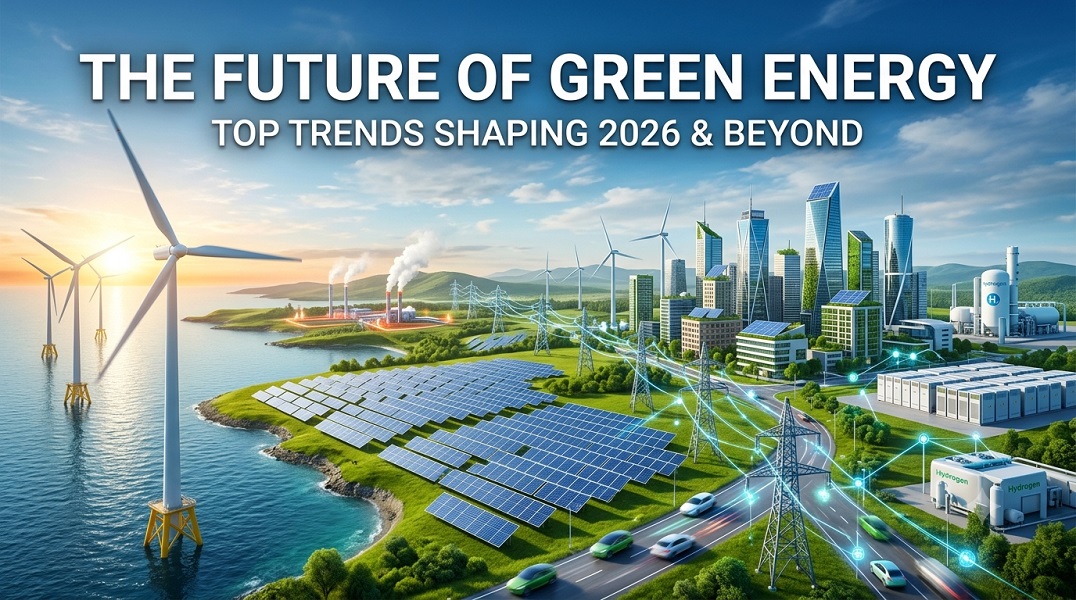
The Future of Green Energy: Top Trends Shaping 2026 and Beyond
The global energy industry is undergoing one of the most significant transformations in modern history. Rising electricity demand, climate concerns, technological innovation, and government investment are accelerating the transition from fossil fuels to renewable energy sources at an unprecedented pace.
Only a decade ago, renewable energy was often viewed as an expensive alternative to coal, oil, and natural gas. Today, solar and wind power are among the most cost-effective forms of electricity generation in many regions of the world. Large-scale battery storage, artificial intelligence, green hydrogen, and smart electricity grids are further strengthening the case for clean energy.
Governments, businesses, and households are investing heavily in sustainable energy solutions. Countries are setting ambitious net-zero targets, corporations are committing to renewable electricity, and consumers are increasingly adopting rooftop solar systems, electric vehicles, and energy-efficient technologies.
The clean energy transition is no longer a future possibility—it is happening now.
This guide explores the technologies, market trends, investment opportunities, and policy developments shaping the future of green energy in 2026 and beyond. Whether you are a homeowner, investor, student, business owner, or policymaker, understanding these trends can help you make informed decisions in an increasingly sustainable economy.
What Is Green Energy?
Green energy refers to electricity and fuel generated from renewable, naturally replenishing resources that produce little or no greenhouse gas emissions during operation.
Unlike fossil fuels, renewable resources are continually replenished by natural processes, making them a more sustainable long-term energy solution.
Major Types of Green Energy
Solar Energy
Solar panels convert sunlight directly into electricity using photovoltaic (PV) cells. Advances in efficiency and manufacturing have made solar energy one of the fastest-growing renewable technologies worldwide.
Common applications include:
- Residential rooftop systems
- Commercial solar installations
- Utility-scale solar farms
- Floating solar projects
- Solar-powered irrigation
Related reading: Battery Energy Storage Systems Explained
Wind Energy
Wind turbines generate electricity by converting kinetic energy from moving air into mechanical power.
Wind power is available through:
- Onshore wind farms
- Offshore wind farms
- Community wind projects
- Small-scale residential turbines
Offshore wind, in particular, is experiencing rapid growth due to stronger and more consistent wind resources.
Hydropower
Hydroelectric facilities generate electricity using flowing water.
Hydropower remains one of the largest renewable energy sources globally, providing reliable baseload electricity while supporting grid stability.
Examples include:
- Large hydroelectric dams
- Run-of-river systems
- Pumped hydro storage
Geothermal Energy
Geothermal systems use heat from beneath the Earth’s surface to produce electricity and provide heating.
Countries with significant geothermal resources include:
- Iceland
- Indonesia
- Kenya
- New Zealand
- United States
Biomass Energy
Biomass converts organic materials into usable energy.
Feedstocks include:
- Agricultural waste
- Forestry residues
- Animal waste
- Municipal organic waste
Modern biomass technologies can contribute to waste management while generating renewable electricity and heat.
Green Hydrogen
Green hydrogen is produced by splitting water into hydrogen and oxygen using electricity generated from renewable energy.
Unlike conventional hydrogen production methods, green hydrogen produces minimal carbon emissions and has the potential to decarbonize industries such as steel manufacturing, shipping, aviation, and heavy transport.
Related reading: What Is Green Hydrogen? (Internal link)
Why Green Energy Matters
Renewable energy is no longer solely an environmental initiative. It has become an economic, geopolitical, and technological priority.
Reducing Carbon Emissions
Burning fossil fuels remains one of the largest sources of greenhouse gas emissions. Expanding renewable energy helps reduce emissions while supporting global climate goals.
Improving Energy Security
Countries that depend heavily on imported fossil fuels face price volatility and supply risks.
Developing domestic renewable energy resources can enhance energy independence and strengthen national resilience.
Lowering Electricity Costs
The cost of solar panels, wind turbines, and battery technologies has declined significantly over the past decade.
In many regions, renewable energy is now the lowest-cost option for new electricity generation, benefiting both consumers and businesses.
Creating Jobs
The renewable energy sector supports employment across a wide range of industries, including:
- Engineering
- Manufacturing
- Construction
- Installation
- Operations and maintenance
- Software development
- Artificial intelligence
- Energy consulting
As clean energy deployment expands, demand for skilled workers continues to grow.
Supporting Sustainable Economic Growth
Renewable energy investments stimulate infrastructure development, encourage technological innovation, and attract private capital.
Countries leading the clean energy transition are positioning themselves for long-term economic competitiveness.
Why Green Energy Is Growing Faster Than Ever
Several powerful forces are driving the rapid expansion of renewable energy worldwide.
1. Falling Technology Costs
Solar photovoltaic modules have become dramatically more affordable over the past decade, making solar installations financially viable for households, businesses, and utility providers.
Similarly, wind turbines have improved in efficiency, enabling greater electricity production from fewer installations.
Battery costs have also fallen substantially, making energy storage increasingly accessible.
2. Government Policies and Incentives
Governments are introducing supportive measures such as:
- Renewable energy targets
- Tax incentives
- Investment subsidies
- Feed-in tariffs
- Green financing programs
- Carbon pricing mechanisms
These policies encourage investment while reducing financial barriers for renewable energy projects.
3. Corporate Sustainability Commitments
Many multinational companies have pledged to source 100% renewable electricity or achieve net-zero emissions within the coming decades.
Businesses recognize that renewable energy can:
- Reduce operational costs
- Improve energy resilience
- Meet investor expectations
- Strengthen brand reputation
As a result, corporate demand for clean electricity continues to rise.
4. Advances in Artificial Intelligence
Artificial intelligence is transforming renewable energy by improving forecasting, optimizing energy production, and enabling predictive maintenance.
Machine learning algorithms analyze weather patterns, equipment performance, and electricity demand to maximize efficiency while reducing downtime.
Related reading: How AI Is Revolutionizing Renewable Energy (Internal link)
5. Battery Energy Storage Is Solving Renewable Energy’s Biggest Challenge
One historical limitation of renewable energy has been intermittency.
Solar panels generate electricity only during daylight hours, while wind turbines depend on weather conditions.
Modern Battery Energy Storage Systems (BESS) allow excess renewable electricity to be stored and dispatched when needed, improving grid reliability and supporting higher renewable energy penetration.
Related reading: Battery Energy Storage Systems Explained (Internal link)
6. Rising Consumer Awareness
Consumers increasingly prioritize:
- Sustainable products
- Electric vehicles
- Solar-powered homes
- Energy-efficient appliances
- Lower electricity bills
Growing environmental awareness and long-term cost savings are encouraging wider adoption of clean energy technologies.
7. India’s Renewable Energy Momentum
India has emerged as one of the world’s fastest-growing renewable energy markets.
Government initiatives supporting solar energy, wind power, green hydrogen, and domestic manufacturing are attracting significant investment.
Programs such as rooftop solar incentives, utility-scale renewable projects, and green hydrogen initiatives position India as a major player in the global energy transition.
Top 10 Green Energy Trends in 2026
The green energy sector is entering a new phase of innovation. Renewable energy is no longer limited to installing solar panels or wind turbines. The next decade will be defined by advanced energy storage, artificial intelligence, hydrogen technologies, smart electricity networks, and next-generation materials.
These technologies will determine how quickly the world can move from a fossil-fuel-dependent energy system toward a cleaner, more resilient, and decentralized energy future.
Below are the 10 most important green energy trends expected to shape 2026 and beyond.
1. Green Hydrogen: The Future Fuel for Hard-to-Decarbonize Industries
Green hydrogen is one of the most promising technologies in the clean energy transition.
Hydrogen itself is not a new energy source, but the way it is produced determines its environmental impact.
Traditional hydrogen production relies heavily on natural gas and coal, creating significant carbon emissions. Green hydrogen uses renewable electricity to split water molecules into hydrogen and oxygen through a process called electrolysis.
The result is hydrogen produced with minimal greenhouse gas emissions.
Why Green Hydrogen Matters
Some industries cannot easily switch directly to electricity.
Examples include:
- Steel manufacturing
- Chemical production
- Shipping
- Aviation fuels
- Heavy transportation
Green hydrogen provides a pathway to reduce emissions in these sectors.
Major Applications of Green Hydrogen
Green Steel
Steel production traditionally uses coal-based processes. Hydrogen can replace coal as a reducing agent, significantly lowering industrial emissions.
Heavy Transport
Hydrogen fuel cells can support:
- Long-distance trucking
- Ships
- Heavy machinery
Energy Storage
Hydrogen can store renewable energy for longer periods than conventional batteries.
Excess solar and wind electricity can be converted into hydrogen and used later when energy demand increases.
Challenges of Green Hydrogen
Despite its potential, several challenges remain:
- High production costs
- Limited hydrogen infrastructure
- Transportation difficulties
- Need for large renewable electricity capacity
However, declining renewable energy costs and government investment are expected to accelerate adoption.
Internal Link Opportunity:
→ What Is Green Hydrogen? Everything You Need to Know
2. Battery Energy Storage Systems (BESS): The Backbone of Renewable Energy
Energy storage is becoming one of the most important parts of the clean energy ecosystem.
Renewable energy generation is variable:
- Solar produces electricity during the day
- Wind output changes with weather conditions
Battery Energy Storage Systems solve this problem by storing electricity when production exceeds demand and releasing it when needed.
How BESS Works
A typical battery storage system includes:
- Battery cells
- Battery management system
- Power conversion equipment
- Energy management software
These systems can operate at different scales:
Residential Storage
Homeowners can store excess rooftop solar electricity for nighttime use.
Commercial Storage
Businesses can reduce electricity costs and improve energy reliability.
Grid-Scale Storage
Utility companies use large battery farms to stabilize electricity networks.
Benefits of Battery Storage
Grid Stability
Storage systems help balance electricity supply and demand.
Renewable Energy Integration
More solar and wind power can be added without destabilizing the grid.
Energy Independence
Consumers and businesses can reduce dependence on traditional power sources.
Future Battery Technologies
The next generation of energy storage may include:
- Solid-state batteries
- Sodium-ion batteries
- Flow batteries
- Advanced lithium-ion technologies
These innovations aim to improve:
- Energy density
- Safety
- Lifespan
- Recycling capability
Internal Link Opportunity:
→ Battery Energy Storage Systems Explained
3. Artificial Intelligence (AI) in Renewable Energy
Artificial intelligence is becoming a powerful tool for improving renewable energy performance.
AI systems analyze enormous amounts of data from:
- Weather forecasts
- Electricity demand
- Equipment sensors
- Market prices
- Grid operations
How AI Is Transforming Clean Energy
Predicting Solar and Wind Output
AI models can forecast renewable energy production more accurately, helping grid operators manage electricity supply.
Predictive Maintenance
Instead of waiting for equipment failure, AI can identify early warning signs in:
- Wind turbines
- Solar farms
- Battery systems
This reduces downtime and maintenance costs.
Smart Energy Management
AI-powered systems can automatically optimize:
- Electricity consumption
- Battery charging
- Energy trading
Future Potential
AI combined with renewable energy could create:
- Autonomous power plants
- Self-balancing smart grids
- Personalized energy management systems
Internal Link Opportunity:
→ How AI Is Revolutionizing Renewable Energy
4. Smart Grids: Building the Electricity Network of the Future
Traditional electricity grids were designed for centralized power generation.
Large power plants produced electricity and transmitted it to consumers.
The renewable energy era requires a different approach.
Smart grids use digital technology to manage electricity flows dynamically.
Features of Smart Grids
Smart grids use:
- Advanced sensors
- Digital meters
- Automated controls
- Real-time monitoring
- Artificial intelligence
Benefits of Smart Grids
Better Reliability
Smart systems detect and respond to problems faster.
Renewable Integration
They allow more solar, wind, and distributed energy resources to connect safely.
Consumer Participation
Future consumers may become “prosumers” by producing and selling excess electricity back to the grid.
5. Offshore Wind Energy: Expanding Renewable Power Beyond Land
Offshore wind is becoming one of the fastest-growing renewable technologies.
Unlike land-based wind farms, offshore turbines are installed in oceans where wind speeds are typically stronger and more consistent.
Advantages of Offshore Wind
- Higher electricity generation
- Large project capacity
- Less land competition
- Close proximity to coastal cities
Floating Offshore Wind
A major innovation is floating wind technology.
Traditional offshore turbines require fixed foundations attached to the seabed.
Floating turbines can operate in deeper waters where stronger winds are available.
Challenges
- High installation costs
- Marine environmental considerations
- Complex maintenance requirements
Future technological improvements are expected to reduce costs.
6. Floating Solar Farms: Using Water Surfaces for Clean Energy
Floating solar, also known as floatovoltaics, involves installing solar panels on reservoirs, lakes, and water bodies.
Benefits of Floating Solar
Saves Land
Large solar farms require significant land area. Floating solar reduces land competition.
Improves Solar Efficiency
Water cooling can help solar panels operate more efficiently.
Reduces Water Evaporation
Solar panels covering water surfaces can reduce evaporation losses.
Growing Opportunities
Floating solar is particularly attractive for countries with:
- Limited land availability
- Large reservoirs
- Water management challenges
India, China, Japan, and Southeast Asian countries are exploring large floating solar projects.
7. Agrivoltaics: Combining Farming and Solar Energy
Agrivoltaics combines agriculture and solar electricity generation on the same land.
Instead of choosing between farming and solar development, agrivoltaics allows both activities to coexist.
How Agrivoltaics Works
Solar panels are installed above agricultural fields while allowing crops to continue growing underneath.
Benefits
Farmers Gain Additional Income
Farmers can earn revenue from solar electricity generation.
Crop Protection
Panels can provide shade and reduce heat stress for certain crops.
Better Land Efficiency
The same land produces both food and energy.
Potential Applications
- Vegetable farming
- Orchards
- Livestock areas
- Dry regions
8. Perovskite Solar Cells: The Next Generation of Solar Technology
Silicon solar panels dominate today’s market, but researchers are developing new materials to improve efficiency.
Perovskite solar cells are among the most promising innovations.
Why Perovskite Solar Technology Matters
Advantages include:
- Lightweight design
- Flexible applications
- Potentially higher efficiency
- Lower manufacturing requirements
Future Applications
Perovskite technology could enable:
- Solar windows
- Flexible solar surfaces
- Lightweight solar panels
- Building-integrated photovoltaics
Remaining Challenges
Researchers are working to improve:
- Long-term durability
- Commercial scalability
- Weather resistance
9. Electric Vehicle Charging Infrastructure and Renewable Energy
The growth of electric vehicles is closely connected with renewable energy expansion.
Millions of electric vehicles will increase electricity demand, creating both challenges and opportunities.
Renewable Energy + EV Charging
Future charging networks will integrate:
- Solar-powered charging stations
- Battery storage
- Smart charging systems
- Vehicle-to-grid technology
Vehicle-to-Grid (V2G)
V2G technology allows electric vehicles to return electricity to the grid during peak demand periods.
Future EVs may become mobile energy storage systems.
10. Battery Recycling and the Circular Energy Economy
As renewable energy and electric vehicles expand, battery recycling will become increasingly important.
Large numbers of batteries will eventually reach the end of their useful life.
Why Battery Recycling Matters
Recycling helps:
- Recover valuable minerals
- Reduce mining pressure
- Lower environmental impact
- Create sustainable supply chains
Important materials include:
- Lithium
- Nickel
- Cobalt
- Manganese
Future Battery Recycling Technologies
Innovations include:
- Automated recycling systems
- Improved material recovery
- Second-life battery applications
Used EV batteries may find new applications in stationary energy storage before recycling.
Green Energy Technology Comparison Table
| Technology | Current Adoption | Future Potential | Main Challenge |
|---|---|---|---|
| Solar Energy | Very High | Extremely High | Storage |
| Wind Energy | High | Very High | Grid integration |
| Green Hydrogen | Emerging | Very High | Production cost |
| Battery Storage | Growing Rapidly | Extremely High | Raw materials |
| AI Energy Systems | Early Growth | Very High | Data infrastructure |
| Smart Grids | Growing | Very High | Modernization costs |
| Floating Solar | Emerging | High | Installation complexity |
| Agrivoltaics | Early Stage | High | Project design |
| Perovskite Solar | Research/Commercializing | Very High | Durability |
| Battery Recycling | Growing | Essential | Recycling infrastructure |
Key Insights From 2026 Green Energy Trends
The future energy system will not depend on one technology alone.
Instead, the clean energy transition will be powered by an interconnected ecosystem:
Renewable generation + Energy storage + Artificial intelligence + Smart grids + Electrification + Green fuels
Solar and wind will provide clean electricity. Batteries will provide flexibility. Hydrogen will support heavy industries. AI will optimize the entire system.
Together, these technologies will redefine how the world produces, stores, and consumes energy.
Green Energy Around the World: Global Renewable Energy Transformation
The transition to green energy is a global movement, but different countries are following different pathways based on their resources, economic priorities, and energy needs.
While some nations are leading through massive renewable energy investments, others are focusing on manufacturing, hydrogen development, grid modernization, or energy independence.
The future energy landscape will likely be shaped by collaboration between governments, technology companies, investors, and consumers.
India: A Rising Renewable Energy Powerhouse
India has become one of the world’s fastest-growing renewable energy markets.
With increasing electricity demand, economic expansion, and ambitious climate goals, renewable energy has become a strategic priority for the country.
India’s clean energy strategy focuses on:
- Solar power expansion
- Wind energy development
- Green hydrogen production
- Battery storage
- Renewable manufacturing
- Grid modernization
India’s Solar Energy Growth
India receives abundant sunlight throughout the year, making solar energy a key component of its renewable energy strategy.
Major developments include:
- Large-scale solar parks
- Rooftop solar adoption
- Solar-powered agriculture
- Floating solar projects
Solar energy is expected to remain one of India’s biggest contributors to future electricity generation.
India’s Green Hydrogen Opportunity
India is positioning itself as a global hub for green hydrogen production.
Potential applications include:
- Green steel manufacturing
- Fertilizer production
- Heavy transportation
- Export opportunities
The growth of green hydrogen could create new industries, jobs, and investment opportunities.
Internal Link Opportunity:
→ India’s Green Hydrogen Mission: Goals, Investments, and Challenges
United States: Innovation and Clean Energy Investment
The United States remains one of the world’s largest renewable energy markets.
Key growth areas include:
- Utility-scale solar
- Wind power
- Battery storage
- Electric vehicles
- Clean technology manufacturing
Major US Renewable Energy Trends
Solar Expansion
Large solar farms continue to grow due to declining technology costs and increasing electricity demand.
Offshore Wind Development
Coastal states are investing in offshore wind projects to access stronger ocean winds.
Energy Storage Growth
Battery storage projects are expanding to improve grid reliability and support renewable integration.
China: The World’s Largest Renewable Energy Manufacturer
China plays a dominant role in global clean energy manufacturing.
The country leads in:
- Solar panel production
- Battery manufacturing
- Electric vehicles
- Renewable energy installations
China’s Renewable Energy Advantage
China’s large manufacturing ecosystem has helped reduce costs for renewable technologies worldwide.
Its investments in:
- Solar factories
- Battery supply chains
- High-voltage transmission
- Renewable infrastructure
have accelerated global clean energy adoption.
Europe: Leading the Clean Energy Transition
Europe has made renewable energy a central part of its climate and energy security strategy.
Major focus areas include:
- Wind power
- Solar energy
- Green hydrogen
- Energy efficiency
- Cross-border electricity networks
Europe’s Energy Transition Goals
European countries are investing in:
- Renewable electricity generation
- Carbon reduction programs
- Hydrogen infrastructure
- Smart energy systems
The region is also focusing on reducing dependence on imported fossil fuels.
Middle East: From Oil Economy to Renewable Energy Hub
Traditionally known for oil and gas production, several Middle Eastern countries are now investing heavily in renewable energy.
Key areas include:
- Large-scale solar projects
- Green hydrogen
- Energy exports
- Clean technology investments
Countries with abundant sunlight have significant potential for low-cost solar power generation.
Challenges Facing the Green Energy Transition
Although renewable energy growth is accelerating, several challenges must be addressed before achieving a fully sustainable energy system.
1. Energy Storage Limitations
The biggest challenge with renewable energy is variability.
Solar and wind power depend on natural conditions.
Solutions include:
- Battery storage
- Pumped hydro storage
- Green hydrogen storage
- Advanced grid management
Energy storage will determine how quickly renewable energy can replace traditional power sources.
2. Grid Infrastructure Challenges
Most electricity grids were designed for centralized fossil fuel power plants.
Renewable energy requires:
- Modern transmission networks
- Digital monitoring systems
- Smart grid technology
- Flexible electricity management
Upgrading global electricity infrastructure will require significant investment.
3. Critical Mineral Supply
Renewable technologies require minerals such as:
- Lithium
- Nickel
- Copper
- Cobalt
- Rare earth elements
These materials are essential for:
- Batteries
- Solar panels
- Wind turbines
- Electric vehicles
Building sustainable supply chains will become increasingly important.
4. High Initial Investment Costs
Although renewable technologies are becoming cheaper, large-scale projects require significant upfront investment.
Costs include:
- Equipment
- Infrastructure
- Land acquisition
- Grid connection
- Research and development
Strong government policies and private investment will remain essential.
5. Skilled Workforce Requirements
The clean energy industry requires millions of skilled workers.
Future demand will increase for:
- Engineers
- Renewable energy technicians
- Battery specialists
- Data scientists
- AI experts
- Project managers
Education and workforce development will play a critical role.
Investment Opportunities in Green Energy
The green energy transition is creating significant investment opportunities across multiple sectors.
1. Solar Energy Investments
Solar remains one of the most attractive renewable energy sectors.
Investment opportunities include:
- Solar manufacturers
- Solar project developers
- Solar technology companies
- Rooftop solar providers
2. Battery Storage Market
Energy storage is expected to become one of the fastest-growing clean energy markets.
Investment opportunities include:
- Battery manufacturers
- Storage technology companies
- Grid-scale storage projects
- Battery recycling businesses
3. Green Hydrogen Economy
Green hydrogen could become a trillion-dollar industrial opportunity.
Potential investment areas:
- Electrolyzer manufacturing
- Hydrogen production facilities
- Hydrogen transportation
- Fuel cell technology
4. Smart Grid Technology
Future electricity systems will require advanced digital infrastructure.
Investment opportunities include:
- Grid software
- Energy management systems
- Smart meters
- Artificial intelligence solutions
5. Renewable Energy Funds and Green Bonds
Investors can participate through:
- Renewable energy funds
- Clean technology ETFs
- Green bonds
- Sustainable infrastructure funds
Green finance is becoming an important tool for accelerating clean energy deployment.
Future Predictions: Green Energy Outlook 2030–2050
The next three decades will likely transform the global energy system.
Prediction 1: Renewable Energy Will Become the Main Electricity Source
Solar and wind power are expected to become dominant sources of new electricity generation.
Future electricity systems will combine:
- Renewable generation
- Battery storage
- Smart grids
- Digital optimization
Prediction 2: Energy Will Become More Decentralized
The future energy system will not only depend on large power plants.
Millions of consumers may become energy producers through:
- Rooftop solar
- Home batteries
- Electric vehicles
- Smart energy systems
Prediction 3: Artificial Intelligence Will Control Energy Networks
AI will help manage:
- Electricity demand
- Renewable forecasting
- Storage decisions
- Grid balancing
Future power networks may operate almost autonomously.
Prediction 4: Green Hydrogen Will Transform Industry
Hydrogen could become a major replacement for fossil fuels in sectors where direct electrification is difficult.
Expected applications:
- Steel production
- Shipping
- Aviation fuels
- Industrial heating
Prediction 5: Battery Technology Will Continue Improving
Future batteries are expected to become:
- Cheaper
- Safer
- More powerful
- Easier to recycle
Emerging technologies such as solid-state and sodium-ion batteries could reshape energy storage.
Green Energy Frequently Asked Questions (FAQs)
1. What is green energy?
Green energy is energy generated from renewable sources such as solar, wind, hydropower, geothermal, and sustainable biomass with minimal environmental impact.
2. Why is green energy important?
Green energy helps reduce carbon emissions, improve energy security, create jobs, and support long-term economic sustainability.
3. What is the fastest-growing renewable energy source?
Solar energy is currently one of the fastest-growing renewable energy technologies due to falling costs and widespread adoption.
4. Is renewable energy reliable?
Yes. Renewable energy becomes more reliable when combined with energy storage, smart grids, and diversified energy sources.
5. What role does battery storage play in renewable energy?
Battery storage helps store excess electricity from renewable sources and provides power when generation decreases.
6. What is green hydrogen used for?
Green hydrogen can support industries such as steel production, shipping, chemicals, and heavy transportation.
7. Can renewable energy replace fossil fuels completely?
Renewable energy can replace a significant portion of fossil fuels, but achieving a fully clean energy system requires advances in storage, infrastructure, and technology.
8. Is green energy a good investment opportunity?
The renewable energy sector offers long-term growth opportunities due to increasing demand, government support, and technological innovation.
9. What renewable energy technology will grow the most?
Solar, battery storage, green hydrogen, and AI-powered energy systems are expected to experience significant growth.
10. How will AI impact renewable energy?
AI will improve energy forecasting, optimize electricity networks, reduce maintenance costs, and increase renewable energy efficiency.
Conclusion: The Future of Green Energy Is Already Here
The global energy system is entering a historic transformation.
Green energy is no longer just an environmental goal—it is becoming the foundation of future economic growth, technological innovation, and energy security.
Solar power, wind energy, battery storage, green hydrogen, artificial intelligence, and smart grids will work together to create a cleaner and more flexible energy system.
The countries and companies that invest in clean energy technologies today will shape the energy landscape of tomorrow.
For consumers, businesses, and investors, understanding green energy trends is becoming increasingly important.
The future of energy will not be defined by one technology.
It will be defined by an interconnected ecosystem where renewable generation, digital innovation, and sustainable infrastructure work together.
The clean energy transition has started—and the next decade will determine how quickly the world moves toward a sustainable future.