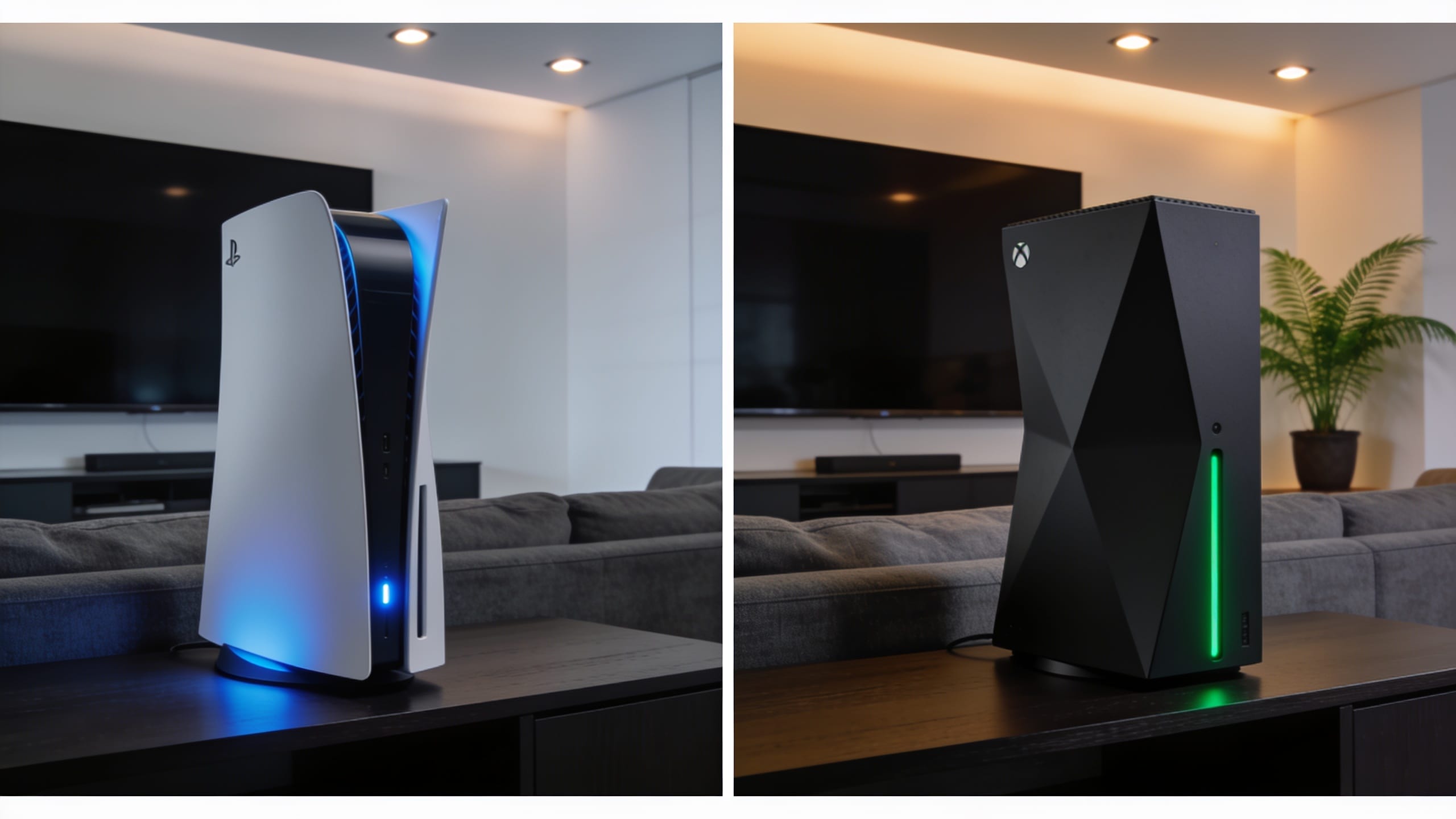


So you’re trying to decide between the PS5 Pro and the Xbox Series X, and you’ve fallen down the same rabbit hole everyone falls down. Welcome. This one comes up constantly, and for good reason: Sony’s shiny mid-generation refresh and Microsoft’s aging-but-still-mighty flagship aren’t even really trying to win the same argument. Whether one “wins” depends entirely on what you actually care about. Raw power? Exclusive games? Getting your money’s worth from a subscription? Sticking with the ecosystem you’ve already sunk years into?
I’ll walk you through the categories that actually matter, and by the end you should have a pretty clear sense of which one belongs under your TV.
Table of Contents
- PS5 Pro vs Xbox Series X: Where Both Consoles Stand in 2025
- How Do the Specs Compare?
- PS5 Pro vs Xbox Series X: Pricing and Value in 2025
- Which Console Has Better Exclusive Games?
- Performance Features: Ray Tracing, Upscaling, and Frame Rates
- Subscription Services and Backward Compatibility
- Console Comparison 2025: Which One Should You Actually Buy?
- Frequently Asked Questions
Where Both Consoles Stand Right Now
The PS5 Pro is Sony’s souped-up version of the PS5, built to squeeze higher frame rates and sharper visuals out of games you already own, while the Xbox Series X is still the same top-tier box Microsoft launched way back in November 2020, leaning hard on Game Pass instead of new hardware. Same console generation, technically. But they’re aiming at completely different things heading into 2025.
Here’s what I find interesting about Sony’s play. The PS5 Pro was never meant to kick off a new generation. It’s a performance option for people who already have a stack of PlayStation games and want them to look better without waiting around for a PS6 that’s probably years away. Microsoft went the other direction entirely. They haven’t dropped new console hardware since the Series X and Series S launched together, and instead they’ve poured everything into Game Pass, cloud streaming, and playing nice across PC and console. That’s really the whole ballgame right there. One company refreshed the hardware. The other doubled down on the subscription.
And honestly, that split has kept the rumor mill spinning for years. Gaming communities love trading leaks about hardware refreshes, and a surprising number of them actually turn out to be true. Newsrum’s roundup of the Top 10 Gaming Rumors That Actually Came True in 2024 is a good reminder that not every “I heard from a guy” post is nonsense. Console upgrades in particular tend to leak early.
How Do the Specs Compare?
On paper, the PS5 Pro is the stronger machine for anything graphics-heavy, though the Series X still holds up as a solid, well-rounded box that was genuinely cutting-edge when it launched. Sony’s been loud about the Pro’s GPU delivering a big jump over the standard PS5 when it comes to rendering complicated scenes, plus fancier ray tracing. The Series X, meanwhile, was built around a roughly 12-teraflop GPU and an AMD Zen 2 CPU. That setup was seriously competitive at launch, and it still runs modern games without breaking a sweat.
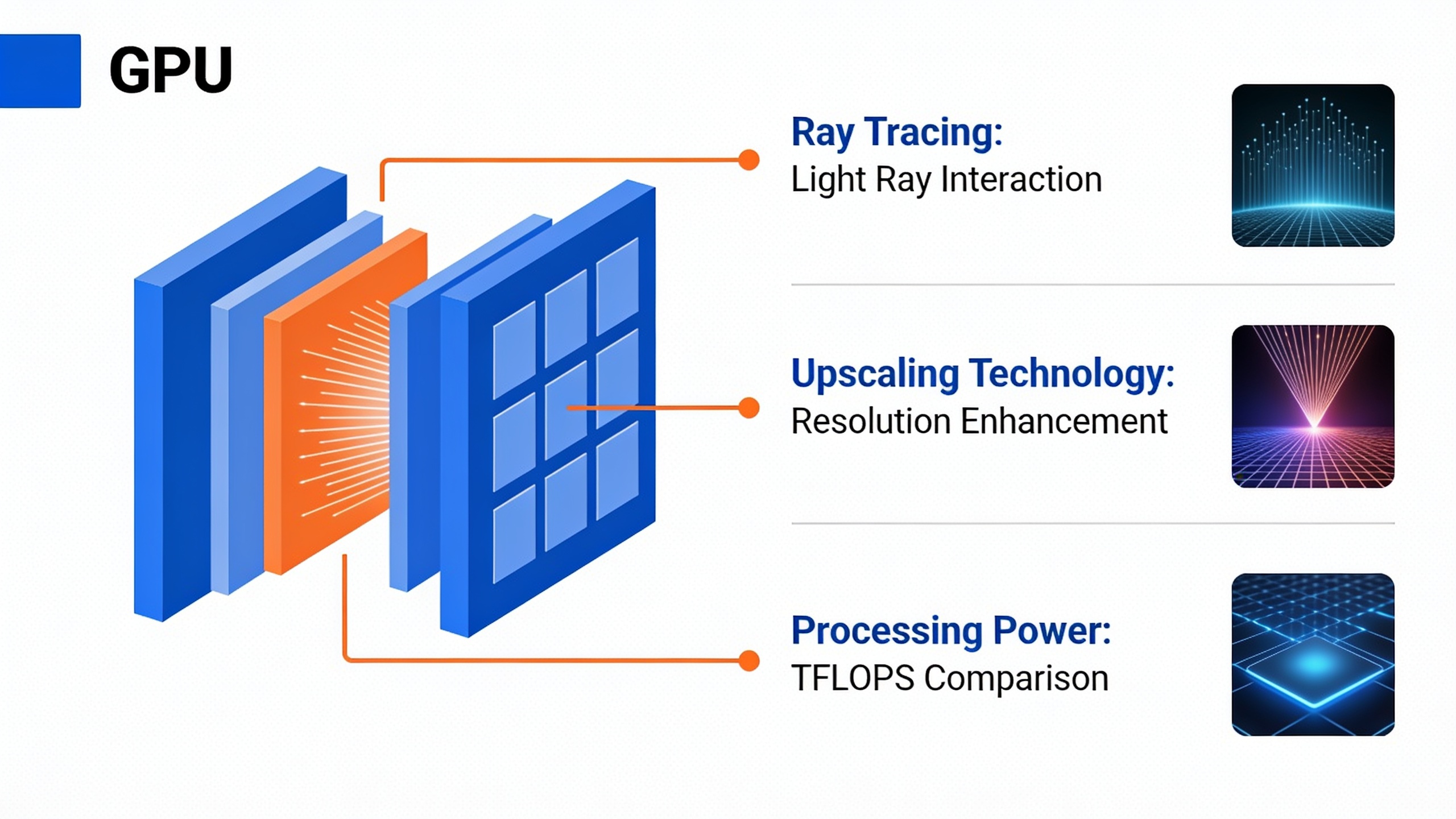
Storage is where things get a little annoying. The PS5 Pro ships with a bigger internal SSD than the base PS5, which matters more than ever now that AAA games routinely eat 100+ gigs. The Series X’s internal drive, on the other hand, has a reputation for filling up fast if you’ve got a decent library, which usually means shelling out for one of those proprietary expansion cards. Both consoles handle 4K and high frame rate modes, but the Pro’s silicon is specifically tuned to actually hit those higher frame rates consistently in games that support it.
Here’s a side-by-side look at how the two generally stack up based on how each company markets them:
| Category | PS5 Pro | Xbox Series X |
|---|---|---|
| Release positioning | Mid-generation performance upgrade | Original flagship console (launched Nov. 2020) |
| GPU focus | Enhanced ray tracing and higher sustained frame rates | Strong at launch; standard current-gen GPU tier |
| CPU architecture | AMD Zen 2-based (shared lineage with base PS5) | AMD Zen 2-based |
| Internal storage | Larger SSD than base PS5 | 1TB-class SSD, expandable via proprietary card |
| Disc drive | Sold separately in most configurations | Not applicable (digital-focused, Series S has no drive) |
| Upscaling tech | PlayStation Spectral Super Resolution (PSSR) | Not stated publicly as an equivalent branded feature |
| Subscription ecosystem | PlayStation Plus | Xbox Game Pass |
| Backward compatibility | PS4 titles largely supported | Deep backward compatibility across older Xbox generations |
One caveat before you screenshot that table and treat it as gospel: exact clock speeds, precise teraflop numbers, and regional pricing all shift around depending on retailer listings and firmware updates. Any single spec sheet is a snapshot, not a permanent truth. If you want the most current numbers, just check Sony’s and Microsoft’s official storefronts before you buy. That’s still the safest bet.
Pricing and Value in 2025
The PS5 Pro launched a lot pricier than the Xbox Series X, which pretty clearly makes it an enthusiast-tier splurge rather than a normal way into the generation. Sony put the Pro at $699.99 at launch in late 2024, and in most configurations that doesn’t even include a disc drive. So if you still buy physical games, your real cost climbs even higher. The Series X, by comparison, has been around since 2020 at an original price of $499.99, and after five years on shelves it shows up in bundles and seasonal discounts all the time.
If you’re watching your budget, that gap is huge. Dropping an extra couple hundred bucks on a mid-gen upgrade is just a completely different decision than picking up a console that’s had half a decade to mellow out on price. Some folks online have joked that the difference between the two is basically the cost of a weekend trip somewhere. And you know what, if a getaway sounds better than a graphics bump this year, that’s a totally fair thought. Might be worth eyeballing some flight and hotel deals through something like Global Holiday Planner before you commit that money to a new box.
But value isn’t just about the sticker price, and this is where it gets interesting. The Series X’s tight relationship with Game Pass means your ongoing cost of actually playing new stuff can be a lot lower over time, especially if you bounce around a bunch of games instead of camping on a handful of exclusives. The Pro’s value pitch is different. It’s for people who already own a big PlayStation library and just want those games to look and run better without jumping ship to a whole new ecosystem.
Which Console Has Better Exclusive Games?
Exclusives are still one of the biggest reasons people pick a side, and Sony has historically gone way harder on first-party, story-driven games than Microsoft has. PlayStation built its whole reputation on narrative-heavy franchises, and here’s the thing about the Pro: it’s not adding brand-new exclusives built only for the hardware. It just makes those same PlayStation games run prettier and smoother.
Microsoft’s whole approach to exclusives has flipped over the past few years. Instead of locking its biggest franchises to Xbox hardware, it’s been putting first-party titles on PC and even on rival platforms. That genuinely scrambles the math if you were about to buy a Series X purely for the games you can’t get elsewhere. Because now, more often than not, you can get them elsewhere. What that shift did was make day-one Game Pass access the real selling point, not exclusivity itself. Most of Microsoft’s big releases just land in the subscription right away.
So the “better exclusives” question isn’t a numbers game anymore. It’s really about which model you prefer. Do you want to buy individual PlayStation exclusives and enjoy them with enhanced Pro performance, or pay a recurring fee for broad access to Xbox’s catalog, knowing some of those games show up on other platforms too? Either way, exclusives matter a lot in this decision, and they’re one of the things gaming communities obsess over most, which, again, is exactly the kind of chatter that sometimes turns into real confirmed news, like the stuff tracked in that Top 10 Gaming Rumors That Actually Came True in 2024 piece.
Performance Features: Ray Tracing, Upscaling, and Frame Rates
The PS5 Pro’s headline feature is PSSR, or PlayStation Spectral Super Resolution, Sony’s AI-driven upscaling tech that boosts image clarity and frame rates in supported games without forcing a full native 4K render. Pair that with a beefed-up ray tracing pipeline that Sony’s been marketing as a real leap over the base PS5, and you get sharper reflections, better lighting, and cleaner shadow detail in games that add specific Pro support.
The Series X doesn’t have a widely marketed, branded upscaling feature to match PSSR, at least not based on anything Microsoft has publicly said. Its edge comes from a different place. The established hardware baseline, and features like Quick Resume, which lets you hop between several suspended games almost instantly. That last one is criminally underrated, by the way. If you’re the type chasing per-game visual upgrades, the Pro’s dedicated features win on paper. But the Series X’s strengths are more about consistency, quick multitasking, and a hardware profile developers have spent five full years learning to optimize for.
Worth flagging, though: not every game automatically gets a “Pro” patch on the PS5 Pro. Developers have to actually build in support, so the real-world benefit swings wildly from title to title. And the reverse is true on Xbox too. How well any given Series X game runs depends a ton on how carefully that specific game was optimized for the box. In theory both consoles are powerful. In practice? It really comes down to the individual game.
Subscription Services and Backward Compatibility
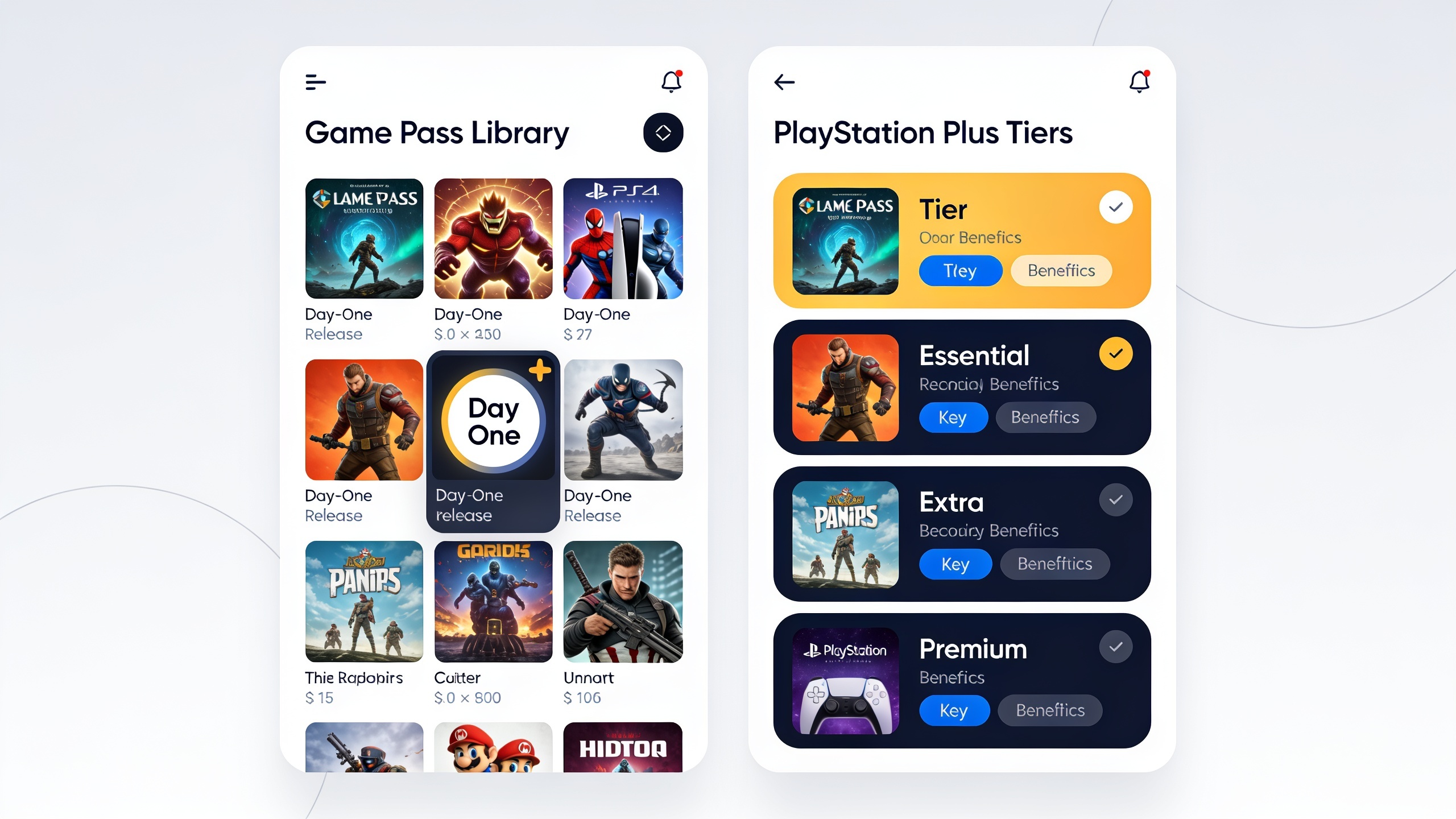
Game Pass and PlayStation Plus represent two totally different philosophies for keeping you hooked after you’ve bought the console, and honestly this is where the gap between the brands feels widest. Game Pass gives members a rotating library, frequently including major first-party games on release day, and that day-one access is genuinely the beating heart of the Xbox pitch rather than some bonus feature. PlayStation Plus is Sony’s tiered equivalent, with different levels of game access and online features. But Sony’s tended to keep its flagship exclusives as standalone purchases instead of dumping them into the subscription on launch day.
Then there’s backward compatibility, which people forget about until they suddenly can’t play an old favorite. The Series X supports a genuinely deep backward compatibility library, letting you revisit games from multiple older Xbox generations on the same machine. That’s a real perk if you’ve got an existing digital collection. The PS5 Pro, like the regular PS5, mostly handles PS4-era titles, but Sony’s backward compatibility just doesn’t reach as far back as Microsoft’s does. If you’re sitting on a mountain of older games, that one difference alone could make the decision for you, spec sheets be damned.
Which One Should You Actually Buy?
There’s no universal winner here, and anyone who tells you otherwise is selling something. The right pick comes down to whether you care more about peak single-player visual performance or broad, subscription-based access to a huge pile of games. Already own a PS5, got a shelf full of PlayStation exclusives, and want the best-looking version of games you’re already playing? The Pro’s enhanced GPU and PSSR upscaling make a reasonable case for the upgrade, even at that steep price. Starting fresh, thinking about long-term value, want deep backward compatibility, and happy to pay a subscription for broad access instead of buying games one by one? The Series X and Game Pass are still a strong, more budget-friendly way in for 2025.
Before you pull the trigger, though, be honest with yourself about how you actually play. These debates online always fixate on hardware bragging rights, but most of us get way more day-to-day joy out of the games and services attached to a console than from teraflop numbers we’ll never think about again. If you mostly sink into narrative single-player games, you lean PlayStation, no contest. If you bounce between a dozen different titles and play across PC and console, Xbox’s subscription model will just get you more mileage. Simple as that.
Frequently Asked Questions
I already own a base PS5. Is the Pro actually worth it?
Depends how much you care about visual upgrades in the library you already have. The Pro is built to enhance existing PS5 games with better ray tracing and PSSR upscaling, not to hand you exclusive new content. So it makes the most sense if you want smoother, sharper performance in games you already own and plan to keep playing.
Does the Xbox Series X do 4K gaming?
Yep. The Series X was built to target 4K output from the jump back in 2020, and it’s still a very capable 4K-focused console for current-gen games.
Which one has more exclusive games in 2025?
PlayStation has historically gone heavier on first-party exclusives, while Microsoft has shifted toward releasing its Xbox games across PC and even other platforms. So Game Pass access ends up being a bigger differentiator than exclusivity by itself.
Is the PS5 Pro more expensive than the Series X?
Yes, and not by a little. The PS5 Pro launched at $699.99, often without a disc drive, while the Xbox Series X originally launched at $499.99. That gives the Series X a clear price edge, especially once you factor in years of bundle deals and discounts.
Do I need Game Pass or PlayStation Plus just to play online?
Pretty much. Online multiplayer is generally tied to each platform’s subscription, so most players will want at least a base tier of Game Pass or PlayStation Plus to play online, on top of whatever game-library perks those subscriptions throw in.
At the end of it, choosing between the PS5 Pro and the Xbox Series X really comes down to one question: are you chasing peak hardware performance for a library you already love, or long-term subscription value with a much wider net of games? Either box will keep you gaming happily well into 2025. And if the rumor mill has taught us anything, the next big console announcement is almost certainly already being whispered about somewhere online right now.